What a Dovetail Bit Needs to Cut Cleanly
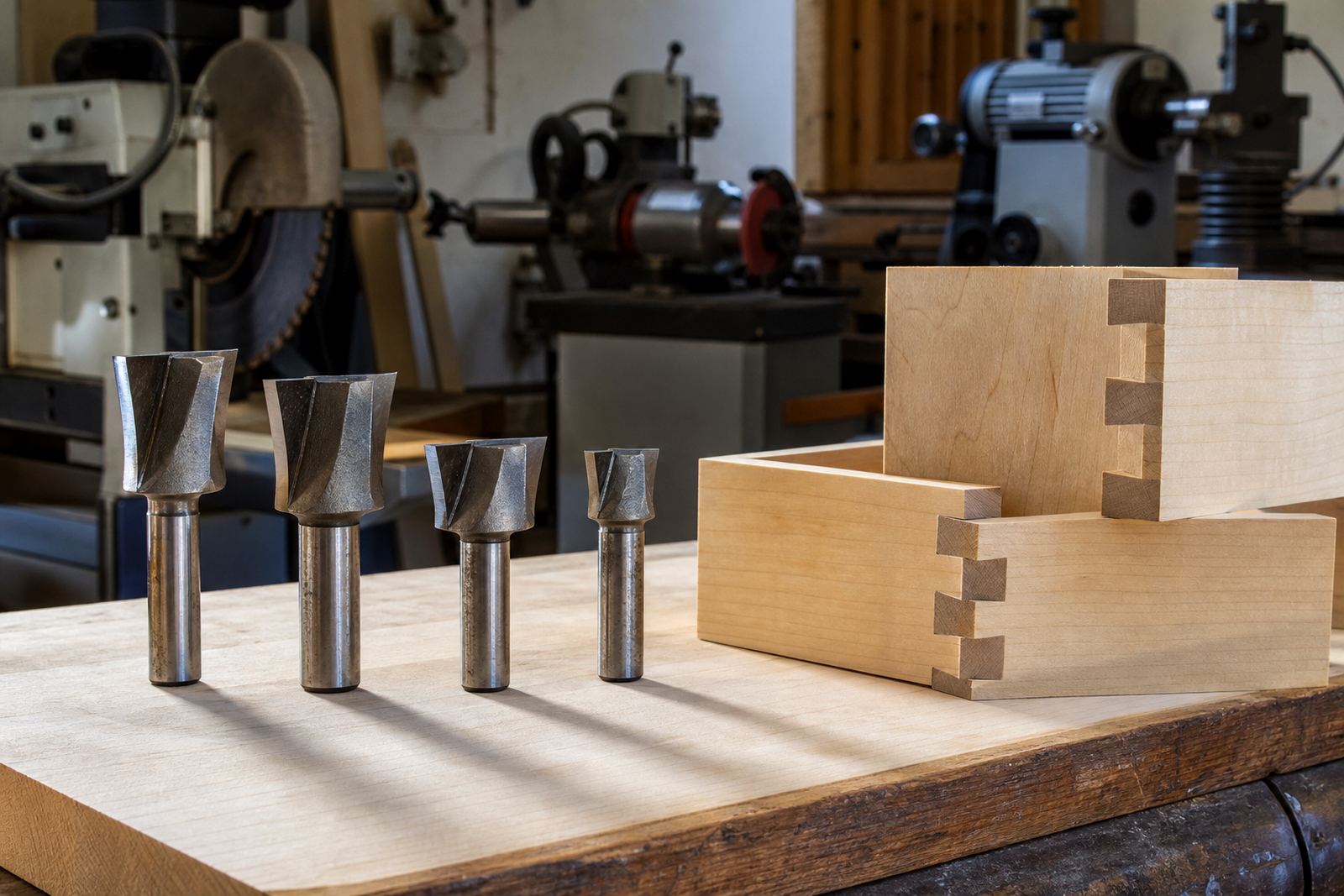
A dovetail bit is used to form a joint with angled sides, often on drawer sides, boxes and light joinery work. The cutter has to hold its profile closely so the male and female parts meet properly. If the edge is blunt or the angle has moved, you start to see tear-out, burn marks and joints that need extra sanding. On fine work that can waste time very quickly.
Our sharpening and regrinding work is set up for cutters where edge precision matters. We check the cutting face, the relief, the tip condition and the overall balance before any grinding is done. That matters on smaller cutters because overheating or taking too much off at once can shorten the life of the bit. We also handle chipped edges and light profile wear, not just simple touch-up sharpening.
Sizes, Shank Types and Cutter Options We Service
Dovetail bits come in different angles and diameters, and the right setting depends on the joinery job. Some are used for hand-fed routers in the workshop, while others are kept for repeat production on jigs and fixtures. We work on common workshop sizes and can regrind cutters that have seen normal wear, as long as there is enough material left for safe correction.
- Common shank sizes: 6 mm, 1/4 inch, 8 mm and 12 mm
- Common cutter diameters: 9.5 mm, 12.7 mm, 15.8 mm and 19 mm
- Typical dovetail angles: 7 degree, 9 degree, 14 degree and 18 degree
- Carbide tipped and solid steel cutters, depending on condition
If the bit has lost too much diameter, we will advise whether a repair pass is still worthwhile. For some cutters the goal is to restore serviceable cutting life while keeping the joint geometry within acceptable tolerance. That is especially important when you are making matching sets for cupboards, drawer fronts or fitted furniture.
Where Dovetail Bits Suit Best in the Workshop
Dovetail cutters are used wherever a neat interlocking joint is needed. In small shops they are common on custom drawers, display boxes, storage units and repair work. On larger operations they are often used with templates or guide systems where repeatability matters. A sharp cutter gives a better edge and reduces the chance of splintering on hardwoods, MDF and laminated boards.
They are also useful in humid coastal conditions such as Durban and Westville, where timber movement can affect the final fit. If the cutter is dull, you often have to force the feed and that creates chatter. On harder species, a dull edge can also leave a slight scorch on the shoulder which then needs extra cleaning before assembly. Keep the cutter sharp and the machine will do less work for the same result.
We regularly receive dovetail bits from workshops in Pinetown, Hillcrest, Pietermaritzburg, Johannesburg, Pretoria and Cape Town. Courier collection is available nationwide, so small batch work and single tools can be handled with the same process.
How We Sharpen and Regrind the Cutting Edge
Before grinding, each bit is inspected for tip wear, edge chips, damage to the bearing area if fitted, and signs of previous overheating. We then assess whether the cutter needs a light sharpening pass, a full regrind, or edge repair only. For dovetail tools, the aim is to preserve the original angle and keep both sides of the profile even. That helps the joint stay consistent from one cut to the next.
We also check for balance after the work is done. On a router bit, uneven wear can create vibration and that can affect finish as well as bearing life. If required, we can tag batches so repeat orders are kept together and matched correctly. This is useful for production shops that send in several cutters at once and need the same standard across the set.
- Inspection of profile, tip wear and chip damage
- Controlled grinding to preserve angle and symmetry
- Burn mark removal where heat has discoloured the cutting edge
- Balance checking on reworked cutters
- Batch tool tagging for repeat jobs
Installation, Machine Use and Power Needs
Dovetail bits are fitted into a router or spindle setup that matches the shank size and machine capacity. Before use, make sure the collet is clean, the bit is seated fully and the cutter is clamped without debris. A loose fit can mark the shank and lead to vibration. If the machine uses a guide bushing or jig, check that the setup still matches the cutter angle after sharpening because a change in diameter can alter the cut slightly.
These cutters do not need gas. They do need stable power and a machine that runs smoothly. In South Africa, load-shedding often affects workshop timing, so it helps to test the router after power returns and before a production run. Let the spindle reach full speed before feeding the tool into the workpiece. If you are cutting hardwood or working on long runs, use a steady feed rate and avoid pausing in the cut, because that can cause burn marks and shortens tool life.
For workshops in areas with dusty conditions or intermittent extraction, clean the cutter after use. Fine dust and resin build-up can make a sharp edge feel blunt sooner than it really is.
Care, Storage and Regrinding Intervals
Good care starts after each job. Brush off resin and dust, wipe the cutter dry and store it so the edges do not knock against other tools. A small nick on a fine dovetail edge can change the way the joint closes. In coastal towns, a light rust film can form quickly if the cutter is left in a damp box or near an open door overnight.
Regrinding intervals depend on the wood type, feed speed and how often the cutter is used. A bit used daily on hardwood will need attention sooner than one used occasionally on softwood. Signs that it is due for service include increased feed resistance, chatter, visible chip-out and darker marks on the work. If you are sending a batch, try to keep similar cutters together so the wear pattern is easier to assess.
- Clean after each use and dry fully before storage
- Keep cutters in sleeves, trays or fitted holders
- Avoid contact with loose screws, nails and offcuts
- Do not run a damaged cutter until it fails completely
What to Check Before You Place an Order
When sending dovetail bits for sharpening or regrinding, it helps to note the shank size, cutter angle, diameter and whether the bit is carbide tipped or solid steel. If there is a matching set, tell us whether you want them kept together. Also mention any problems you have seen, such as chipped edges, burn marks, poor fit or tearing at the shoulder. That gives us a clearer starting point and helps us match the work to the tool condition.
For courier collection, pack each bit so the edge cannot knock around in transit. Wrap the cutters separately and place them in a rigid box with a list of what is inside. If you are in Durban, Pietermaritzburg, Johannesburg, Pretoria, Cape Town, Pinetown, Westville or Hillcrest, we can arrange collection through our enquiry form. From there the tools come to our Pinetown workshop for inspection, sharpening and return.
We work with hobbyists, cabinet makers and production shops who need accurate cutter edges without guesswork. If the bit still has enough life left, we will sharpen it properly and return it ready for the next job.
Key facts
| Service type | Dovetail bit sharpening and regrinding |
|---|---|
| Common shank sizes | 6 mm, 1/4 inch, 8 mm, 12 mm |
| Common diameters | 9.5 mm to 19 mm |
| Common angles | 7 degree to 18 degree |
| Materials serviced | Carbide tipped and solid steel cutters |
| Collection area | Nationwide courier collection from Pinetown, KwaZulu-Natal |