Start With the Basics You Will Use Every Week
A starter kit should make daily tool care easier, not add more clutter. For a small workshop in Pinetown, or a home setup that sees weekend work and short production runs, the kit should cover the tasks that happen most often: cleaning saws, checking drill points, looking over router bits and packing tools safely for regrinding. Keep it simple and practical.
The best kits usually begin with a few hand tools, a cleaning set and a way to label items properly. If you are sending tools by courier from Durban, Pretoria or Cape Town, the kit should also help you track what went in the box and what came back. That saves time when you are busy and the load-shedding schedule changes your day.
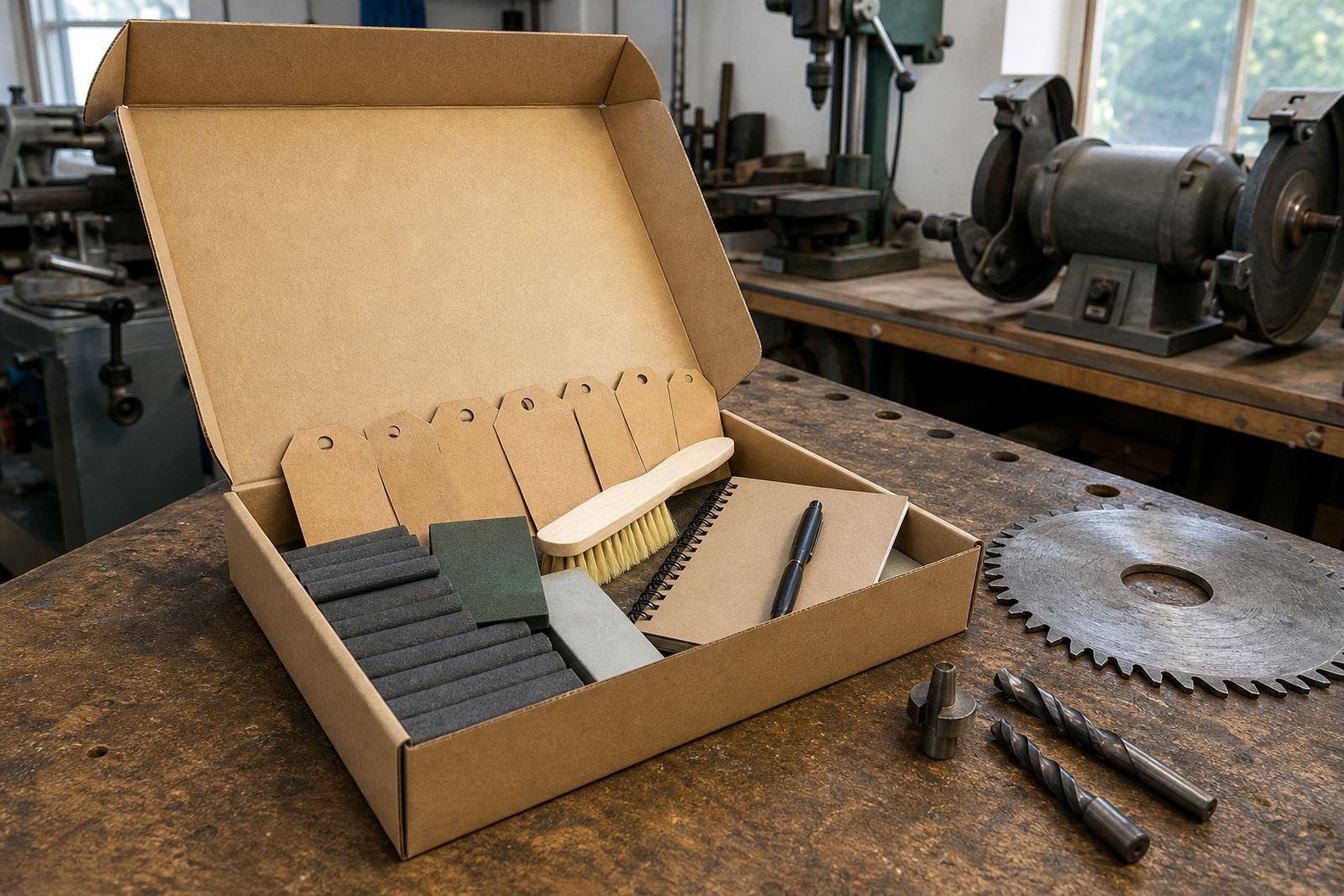
- Soft brass brush or nylon brush for dust and resin
- Lint-free cloths for wiping blades and shanks
- Marker pen and batch tags for identification
- Small magnifier for tooth and edge inspection
- Gloves for handling sharp edges
- Ruler or calliper for checking wear and diameter
Cleaning Gear That Prevents Early Wear
Tool life often drops because of built-up pitch, resin and fine dust. That is common in small South African workshops, especially where timber is cut in warm, humid conditions along the coast. A starter kit should include a cleaner that removes grime without damaging the tool body or brazed parts. Use it before inspection, not after the tool has already been packed away dirty.
Keep the cleaning section of the kit separate from oil and lubricants. Too much oil on a saw blade can trap dust, while solvent left on a drill bit can attract grit. Wipe tools dry after cleaning and store them where air can move around them. In coastal areas like Durban and the broader KZN coast, that little habit helps reduce surface rust.
- Non-corrosive cleaning fluid suitable for cutting tools
- Plastic tray or container for soaking small parts
- Brush for teeth, gullets and flutes
- Dry cloth or paper wipes
- Light rust inhibitor for short term storage
Inspection Tools for Spotting Damage Early
A starter kit is not only about cleaning. It should help you catch problems before they get worse. A chipped edge, uneven tooth face or a router bit with a damaged cutting corner can make the machine work harder and leave a poor finish. That means more waste and more time on the bench later.
Use the inspection part of the kit every time tools return from use. Look for burn marks, missing carbide, bent shanks, uneven wear and teeth that are no longer matching. If you run a small joinery shop in Westville or Hillcrest, this quick check can save a full batch from being sent out late. It also helps you decide whether a tool needs sharpening, regrinding or diameter correction.
- Magnifier or small inspection lens
- Calliper for diameter and wear checks
- Square or straight edge for quick alignment checks
- Bright handheld light
- Notebook or batch sheet for fault notes
Safe Storage and Packing for Regrinding Jobs
Many tools are damaged after use simply because they are thrown into a box loose. A proper starter kit should include storage items that keep blades, drills and router bits apart from one another. This matters even more when you are booking courier collection from Johannesburg, Pretoria, Cape Town or Pietermaritzburg and the tools will travel a fair distance before they reach the workshop.
Use separators, sleeves and tags so each item stays identified. Never let sharp teeth rub together in transit. Keep carbide faces and cutting edges from knocking against steel parts. If you have several sizes in one batch, tag them by machine, size and condition. That makes sorting quicker when the tools come back. It also avoids mix ups, which can happen when a workshop is busy and there is no clear system.
- Rigid box or case with padding
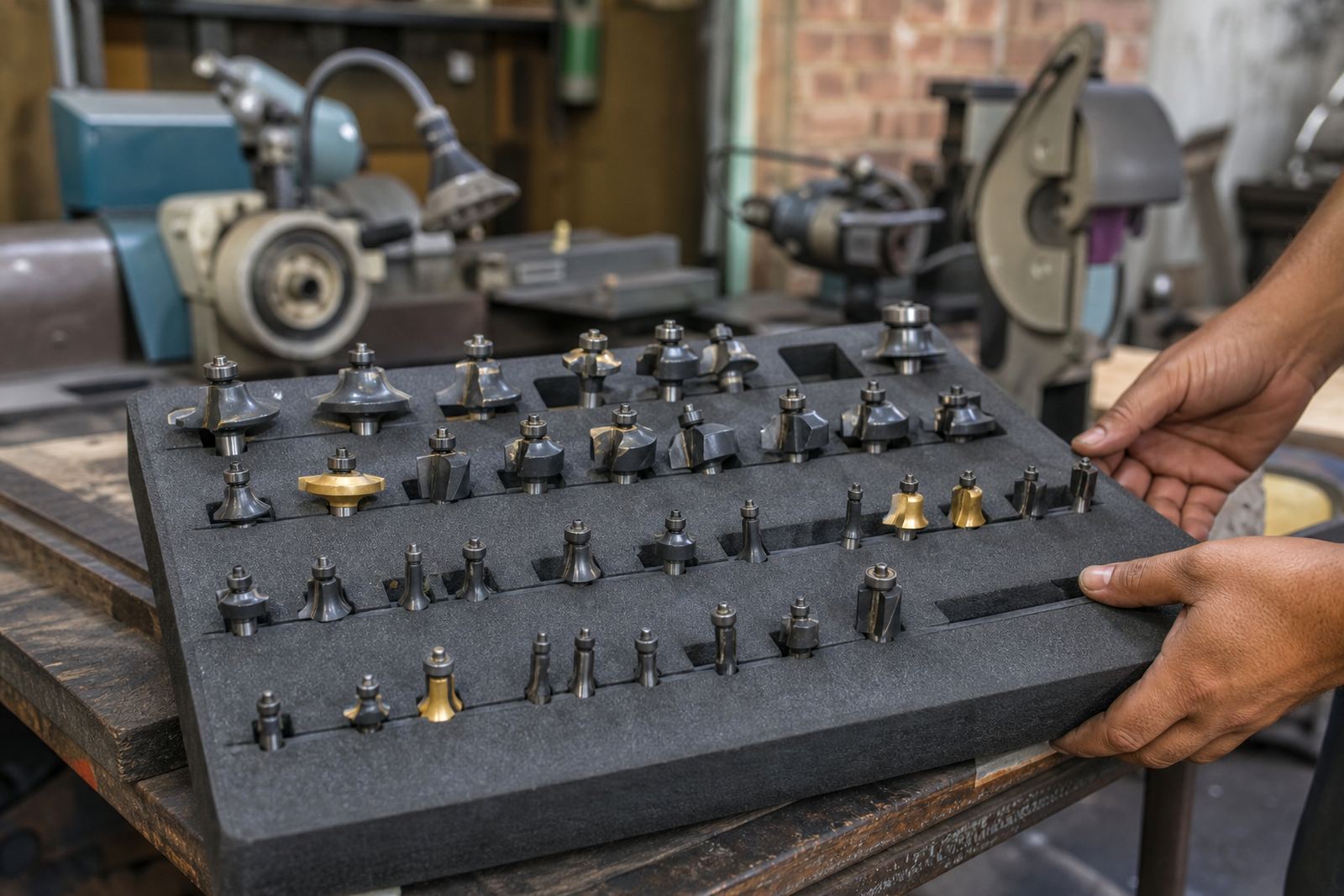
- Cardboard dividers or foam inserts
- Individual sleeves for smaller bits
- Batch tags with size, type and job notes
- Sealable bags for damaged or chipped items
Simple Maintenance Steps for a Small Workshop
A starter kit works best when there is a clear routine behind it. Most small workshops do not need a complicated process, just a repeatable one. Set aside a few minutes at the end of the day or shift to clean, inspect and store tools. If power cuts interrupt the day, use the quiet time to sort, tag and record items by hand.
For good results, follow the same order each time. Clean first, inspect second, then decide what must be sharpened, reground or replaced. Keep a note of which tools cut poorly, which show burn marks and which need angle resetting. That record is useful when you compare performance over time.
- Remove dust, resin and loose chips.
- Check each tool under good light.
- Record damage, wear or uneven edges.
- Separate tools that need sharpening from those that need regrinding.
- Pack and label each batch before storage or courier collection.
What to Teach Staff Before They Start Using the Kit
A starter kit is only useful if the people using it know what each part does. In a small team, training should cover handling, cleaning, packing and basic fault spotting. This does not need to be formal or lengthy, but it must be consistent. One person should not be cleaning saw blades while another leaves grit in the flutes of drill bits.
Good starter training helps staff understand when to stop using a tool and send it for professional sharpening. It also helps them avoid over-cleaning, over-oiling or storing tools wet. That matters in humid coastal areas and in workshops with dust from timber, plastics or board cutting. A simple routine keeps the kit useful for longer and the tools in better condition.
- Show how to handle cutting edges safely
- Explain what normal wear looks like
- Demonstrate proper packing for collection
- Assign one person to batch tagging
- Review the kit every month and replace worn items