Start with the tools that stop production first
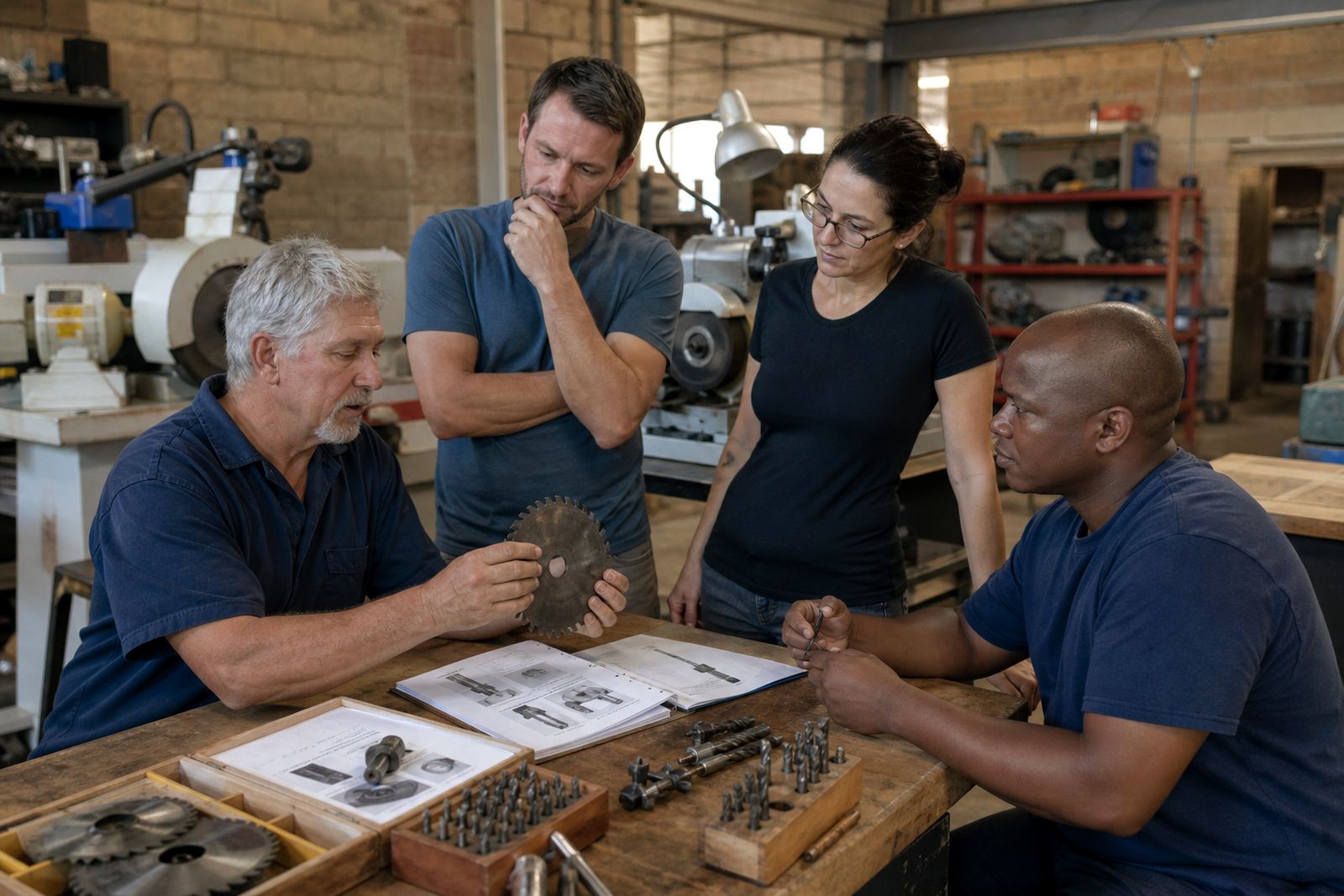
Begin by listing every cutting tool that your workshop depends on day to day. In Pinetown and the wider Durban area, many small factories and joinery shops only need one saw blade or router bit out of action before a whole batch slows down. Group tools by machine, job type, diameter, tooth count and material so you can see what cannot be left waiting.
Mark the tools that must always have a spare ready. These are usually the items used on your main saws, drill presses and routers. If you run shift work or deal with load-shedding, keep extra attention on tools that are used late in the day because there is less room for delay.
Set up a simple rotation schedule
A spare rotation plan works best when it is written down and kept where the team can see it. Use one sheet or log for each machine, with the working tool, the spare tool and the next tool due for courier collection. This keeps everyone clear on what is being used and what is ready to go back into service.
- Record the date a tool went into service.
- Note the cut quality, heat build up and any burn marks.
- Set a rule for when a tool must come out, even if it still cuts.
- Keep a minimum of one spare for critical tools and two for high-use cutters.
For businesses in Durban, Johannesburg or Cape Town, a courier collection booking makes planning easier because tools can be sent out before they fail completely. That way you are not waiting until the last possible day.
Match the spare to the job, not just the machine
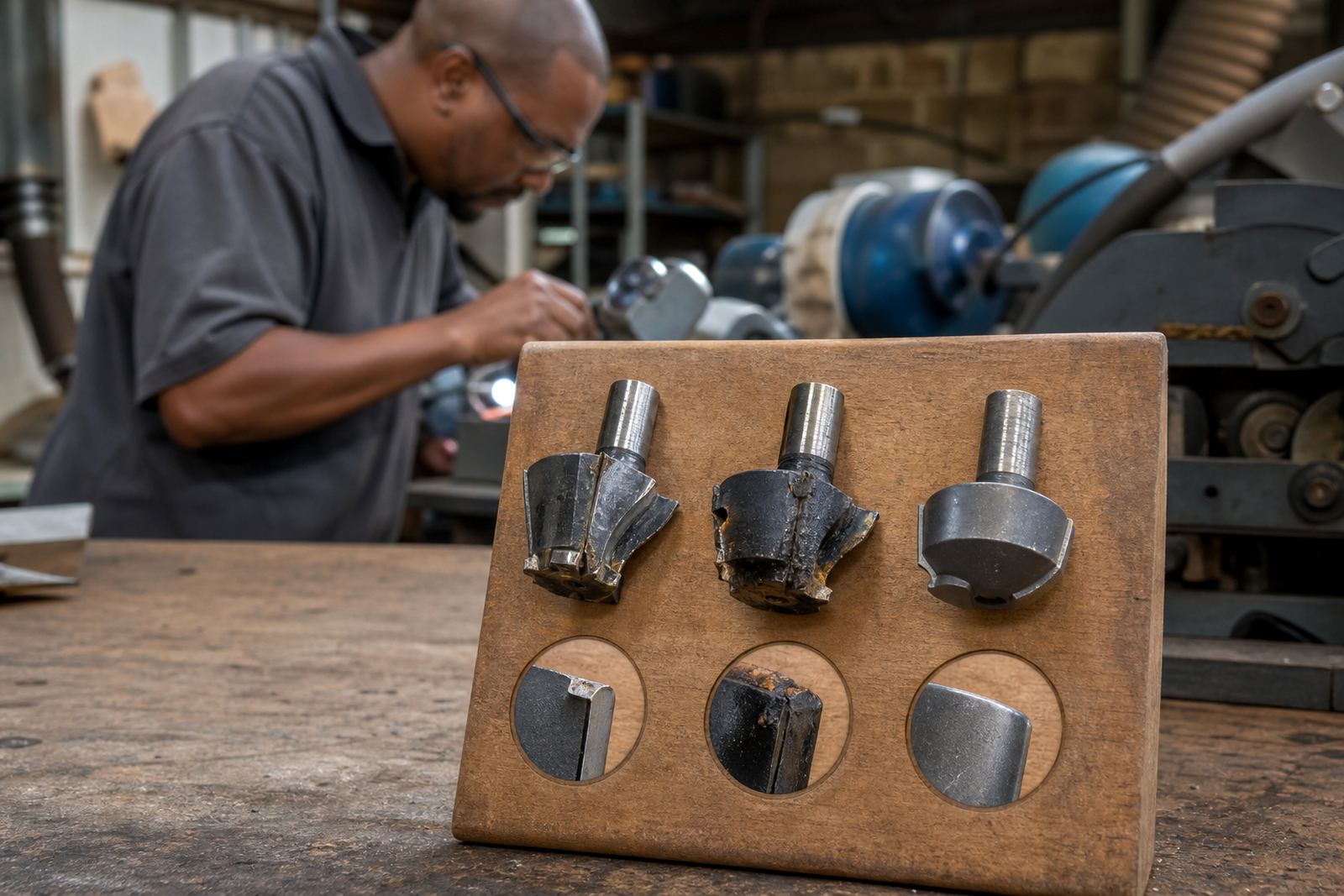
Two tools may fit the same machine but still perform very differently. When planning spares, match the spare to the exact workpiece, material and finish required. A blade used on hardwood, for example, may need a different grind to one used on softwood or board products. The same applies to drill sharpening and router bit sharpening, where edge condition and angle matter more than people think.
Keep notes on which spare works best for each task, especially on repeat jobs. If a blade is used for high-volume cutting, set aside a spare with the same diameter and tooth pattern so the team can swap over without changing setup too much. This saves time and avoids re-setting a machine in a rush.
Build a tool handover routine for courier collections
When tools are collected from Pinetown, Westville, Hillcrest, Pietermaritzburg or further afield, the handover should be quick and clean. Bag or box each tool properly, label it and note the machine it came from. Batch tool tagging is useful here because it keeps mixed jobs from getting confused at the workshop.
- Wipe off dust, oil and pitch before packing.
- Tag each tool with the machine name and job number.
- Separate damaged tools from regular sharpening jobs.
- List any special instructions such as diameter correction or angle resetting.
This step helps avoid delays when the tools arrive for processing and reduces back-and-forth later on. It also makes it easier to plan which spare should be fitted while the original is away.
Use condition checks before every swap
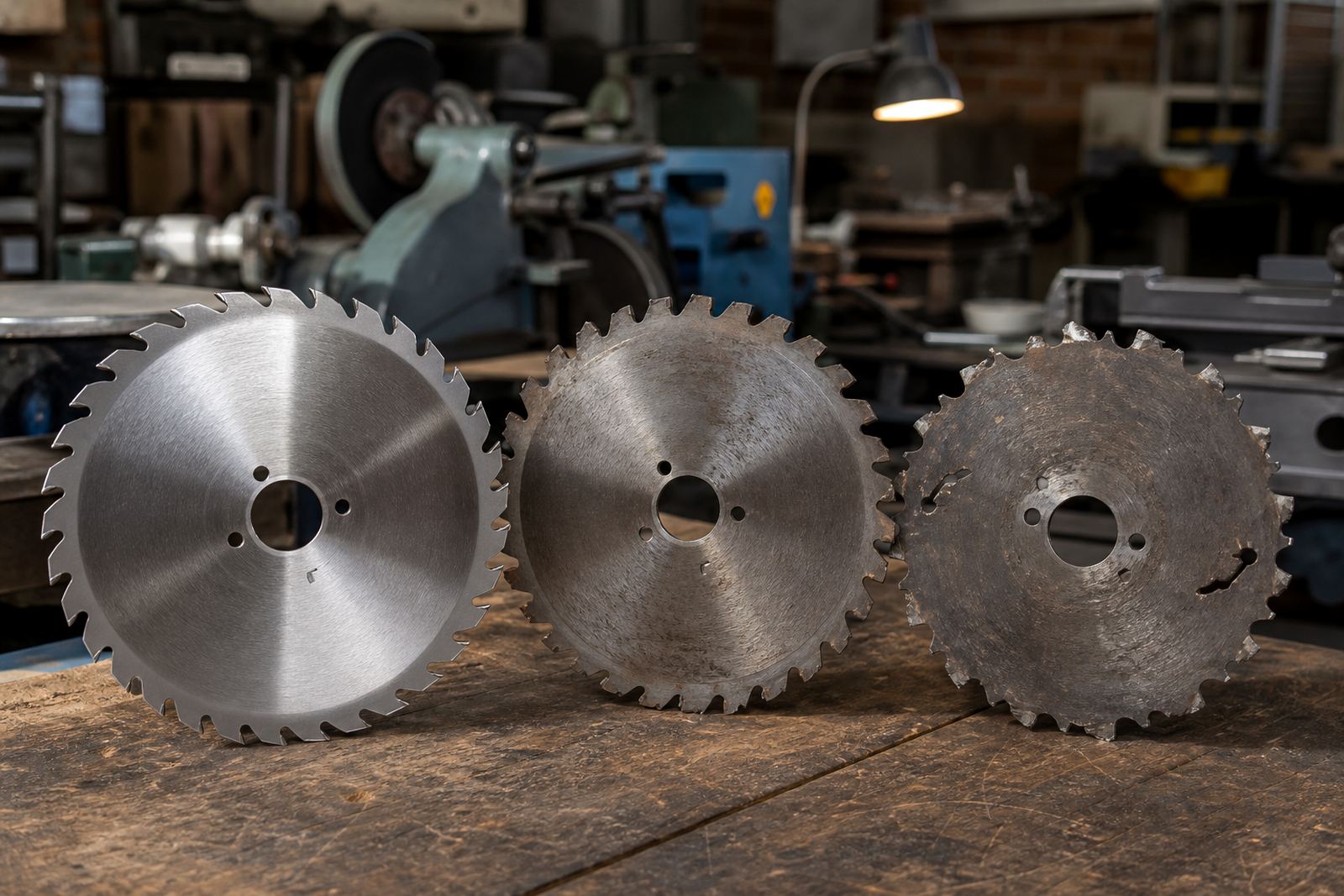
A spare rotation plan should not rely only on the calendar. Do a quick condition check before fitting any tool back into service. Look for chipped edges, uneven wear, noise, vibration and poor finish on the cut face. If the tool is making burn marks or leaving rough edges, it may need regrinding rather than just a light sharpen.
Use a short checklist at the machine so the operator can decide fast. This is especially useful in workshops with several staff members, because one person may notice a change in cut quality before another does. A few minutes spent checking can save a damaged batch and a lost morning.
Keep spares clean, dry and properly stored
Spares only help if they are in usable condition when needed. Store them off the floor, away from damp walls and out of direct sun. In coastal areas like Durban and parts of the KZN coast, humidity can cause corrosion fast, so sealed storage or oiled wrapping is worth the effort. In inland towns, dust is the bigger problem and can still blunt an edge over time.
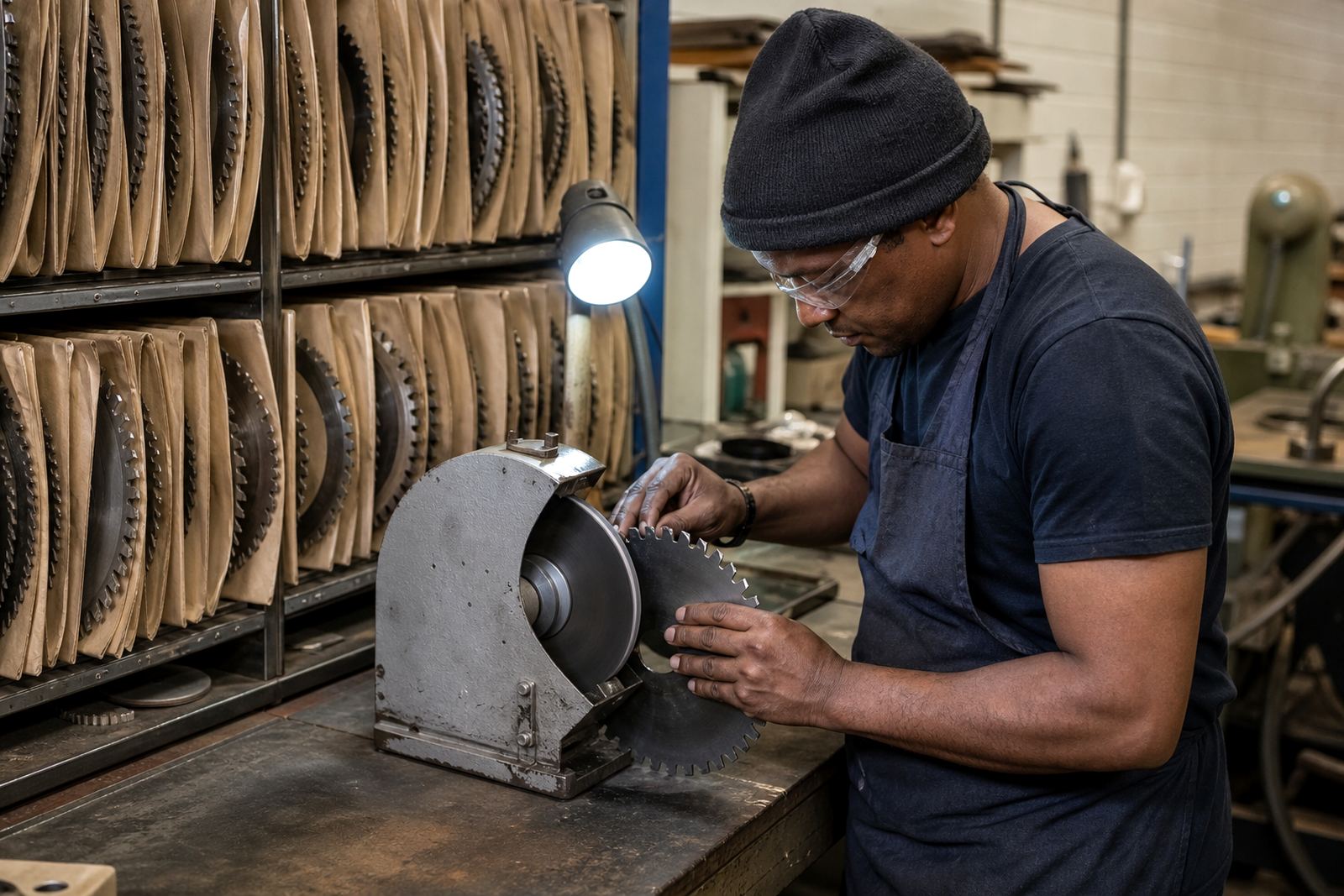
Give each spare a marked place on a rack or in a labelled box. Do not leave tools loose in a drawer where teeth can knock together. A clean storage habit also makes it easier to track balance checking and see when a spare should be sent for sharpening before it is put under pressure again.
Review the rotation after every busy month
Your rotation plan should change as your workload changes. At month end, review which tools were swapped most often, which ones came back chipped and which jobs caused the most wear. This is where a small workshop in Pretoria may learn that one blade lasts longer on certain materials, while a Cape Town client may find the sea air means more frequent cleaning and storage care.
Use the review to decide whether you need more spares, better tagging, or earlier courier bookings. It is also the right time to book training for staff who handle tool care. A better plan now means fewer stoppages next month and less pressure when the phones are busy and orders are already lined up.