Start with the cut, not the blade
The first sign of trouble is usually in the workpiece. If the saw is leaving rough edges, extra burn marks, or forcing the machine to work harder, the blade may be blunt or out of shape. On site jobs in Pinetown, Durban and the wider KwaZulu-Natal area we often see blades that have been pushed too long after the first warning signs showed up.
Before you send a blade in, look at the last few cuts it made. If the cut quality has changed gradually, that usually points to wear. If the cut suddenly went off line, started chattering, or the saw motor sounded strained, there may be tooth damage, a set issue, or balance trouble. Heat, wet timber and dusty workshop conditions all play a part, especially where blades are used daily and not cleaned after each shift.
- Burn marks on timber or laminate
- Rough cut edges or tear out
- More vibration than normal
- The saw has to be pushed harder
- Blade smells hot after short use
Signs that sharpening is enough
A blade that is simply dull often still looks clean, with teeth that are intact and evenly spaced. In those cases, sharpening can restore the cutting edge and get the blade back into service without major correction. This is common with general workshop blades, framing blades and batch-used blades that have lost bite but not structure.
If the carbide tips are still present and there is no heavy damage, sharpening is usually the best starting point. It is quicker and more cost-effective than replacing a blade that still has useful life left. A blade used for softwood, board, or light section work may only need tooth face grinding and top grinding to return to normal cutting.
- Teeth are dull but not broken
- Cut quality has dropped evenly across the blade
- No major bends or missing sections
- Burning is light to moderate, not severe
- The blade has not been overheated or dropped
When regrinding or correction is the right call
Some blades need more than sharpening. If the blade has uneven teeth, damaged gullets, a bad set, or a poor diameter after repeated use, correction work may be needed. This is where services like angle resetting, diameter correction and balance checking come in. They help recover a blade that is still usable but no longer cutting true.
Chipped edge recovery is also useful when a few teeth have damage from nails, knots or accidental contact with foreign material. A blade with one side working harder than the other can pull off line and leave a poor finish. Regrinding can bring the cutting geometry back into shape so the saw runs straighter and with less strain on the motor.
- Uneven tooth height or angle
- Blade pulls left or right during cuts
- Noticeable vibration at speed
- Some teeth are chipped, but not the whole rim
- Burn marks continue even after cleaning
When replacement is the safer option
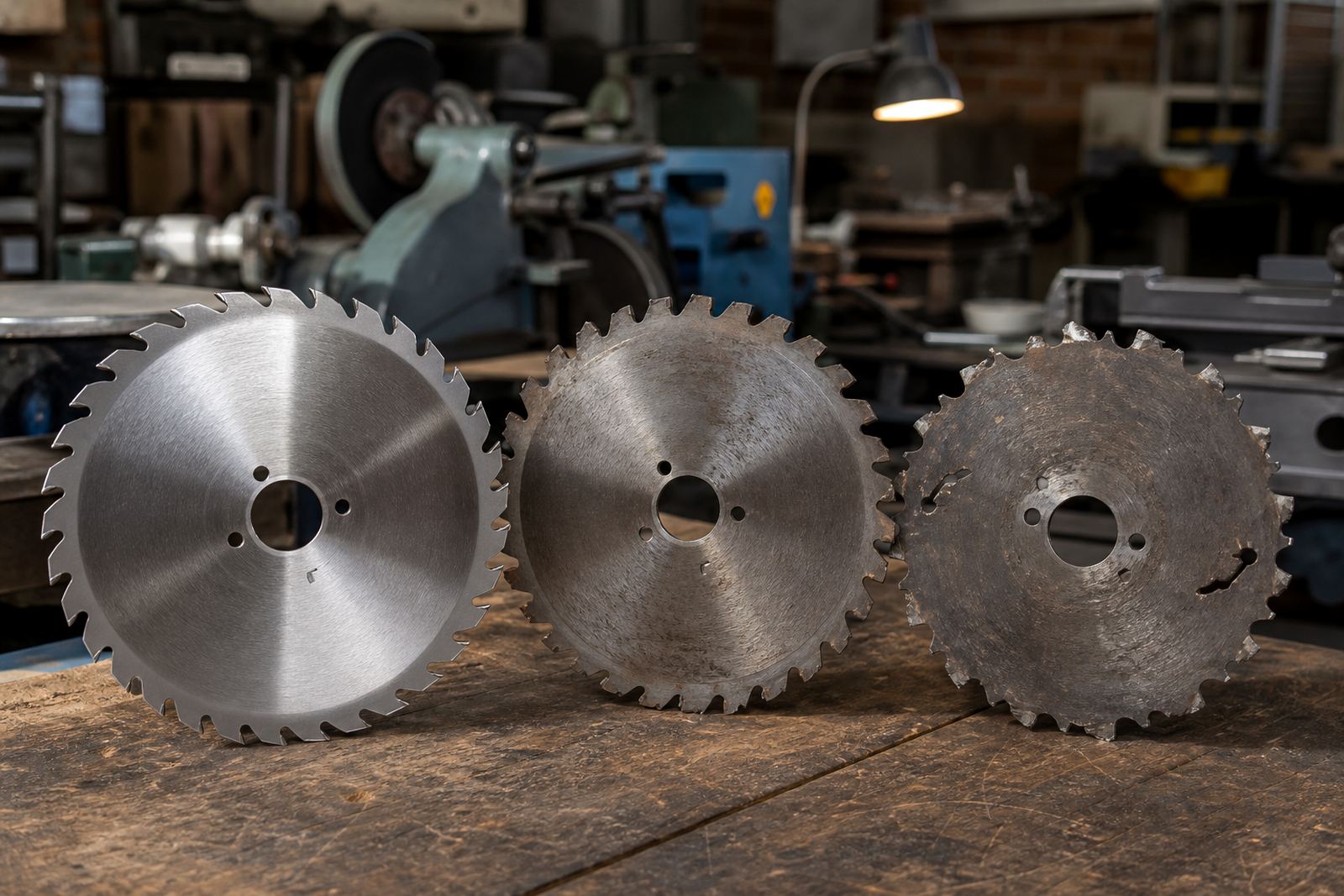
There comes a point where saving a blade no longer makes sense. If the body is warped, cracked, heavily overheated or too short after several correction cycles, replacement is the safer choice. The same applies if the blade has lost too much material to hold a proper cutting profile. We would rather say no than send out a blade that cannot cut safely.
Severe damage is not always obvious at first glance. A blade may still spin, but that does not mean it is fit for work. If the blade has been dropped, run through old nails repeatedly, or overheated during long runs with poor feed rates, it may be past practical recovery. In these cases, using it again can damage the saw, spoil material and create unnecessary risk for the operator.
As a simple rule, if the repair cost is nearing the value of a suitable replacement, or the blade is no longer holding its geometry, replacement is the better call.
A quick inspection before you book collection
Before booking a courier collection from Pinetown, Westville, Hillcrest or further afield, do a short check in the workshop. Clean the blade lightly, inspect the teeth under good light, and note what the saw was cutting when the problem started. This helps us decide whether the blade needs sharpening, correction or a full replacement recommendation.
If you have several blades, batch sorting makes the job easier. Separate the blades that only need sharpening from the ones that need angle resetting or balance checking. Marking each blade avoids mix-ups, especially when a workshop has different diameters and tooth counts on the same bench.
- Check for missing or chipped teeth
- Look for scorch marks or resin build-up
- Confirm the blade size and tooth count
- Note the material it was cutting
- Tag groups of blades for batch service
How to choose the right service for your workshop
If you run a small home workshop, a joinery shop, or a busy production line, the right service depends on how the blade is used. Hobby users often need straightforward saw blade sharpening after light wear. Trade users in Durban, Johannesburg or Pretoria may need more frequent regrinding because the same blade is used daily and exposed to dust, heat and long hours.
For saws, drills and router bits alike, the decision should always follow the condition of the tool, not guesswork. Our team at CutTool Sharpening works through the job one tool at a time and keeps the process practical. We also offer training and starter kits for users who want to keep basic maintenance under control between services, especially where load-shedding or tight turnaround times make tool care harder.
If you are unsure, send the blade in for inspection through the enquiry form on our contact page. We will tell you if it needs sharpening, correction, or if replacement is the better option.