
1. Sort tools before you pack anything
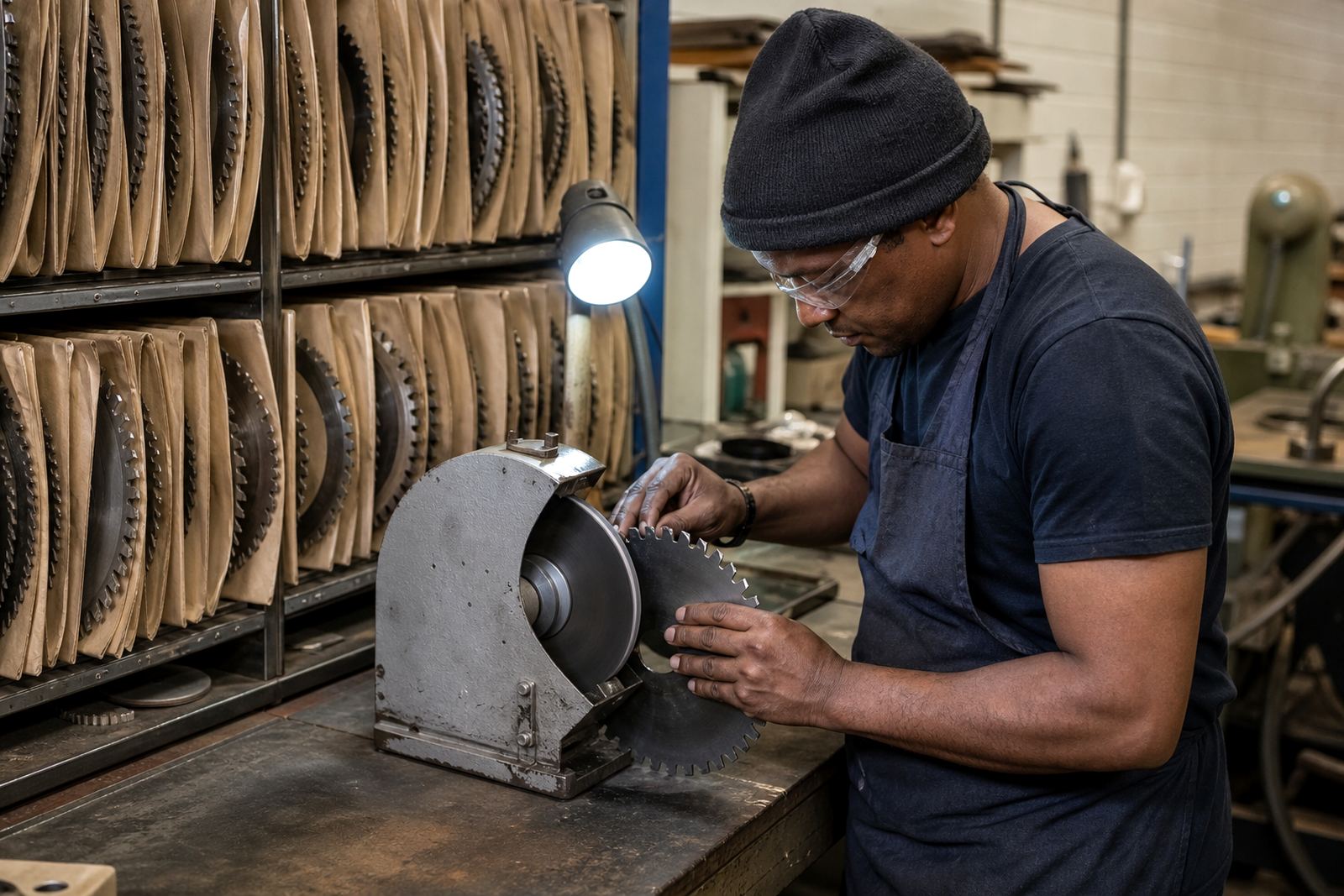
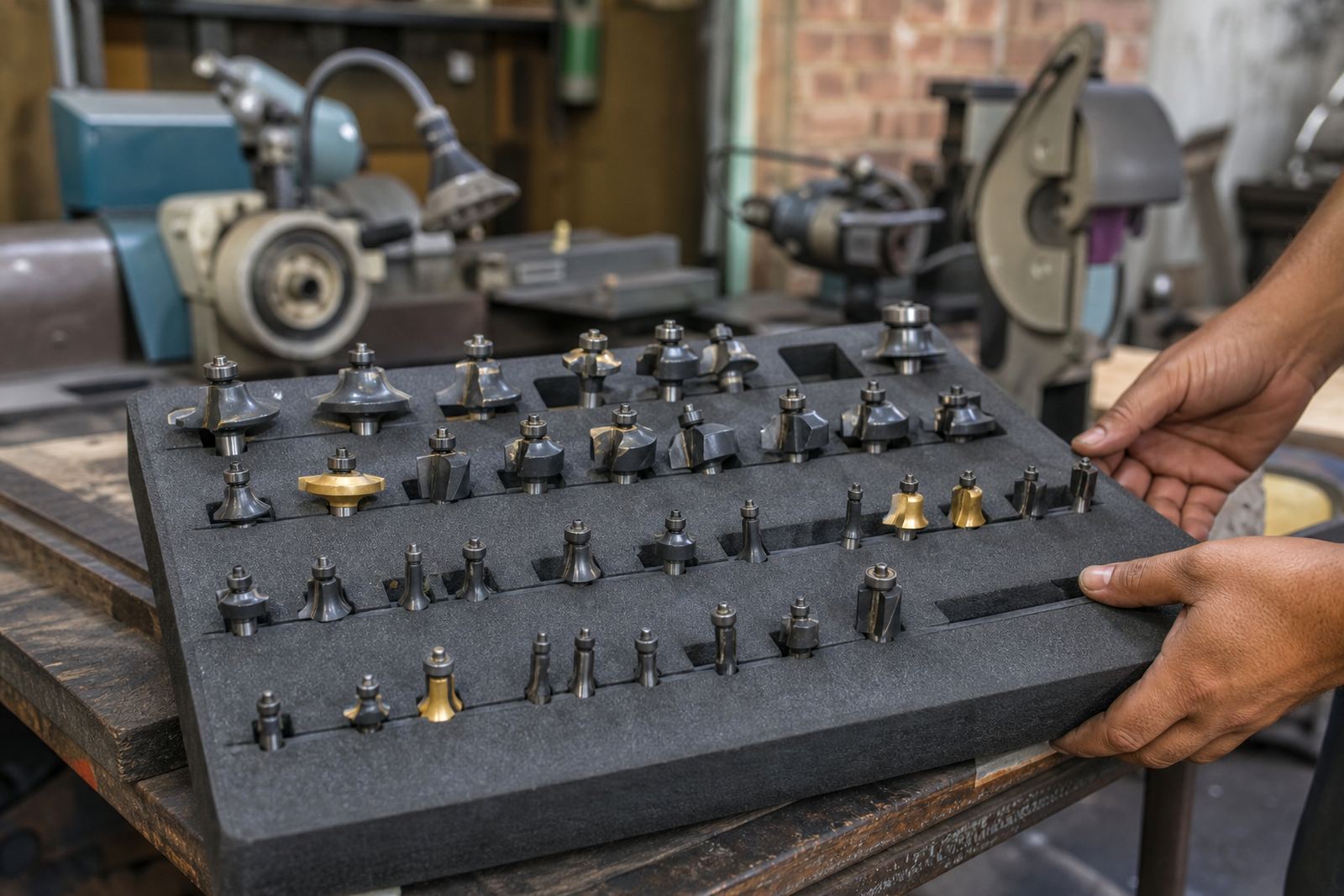
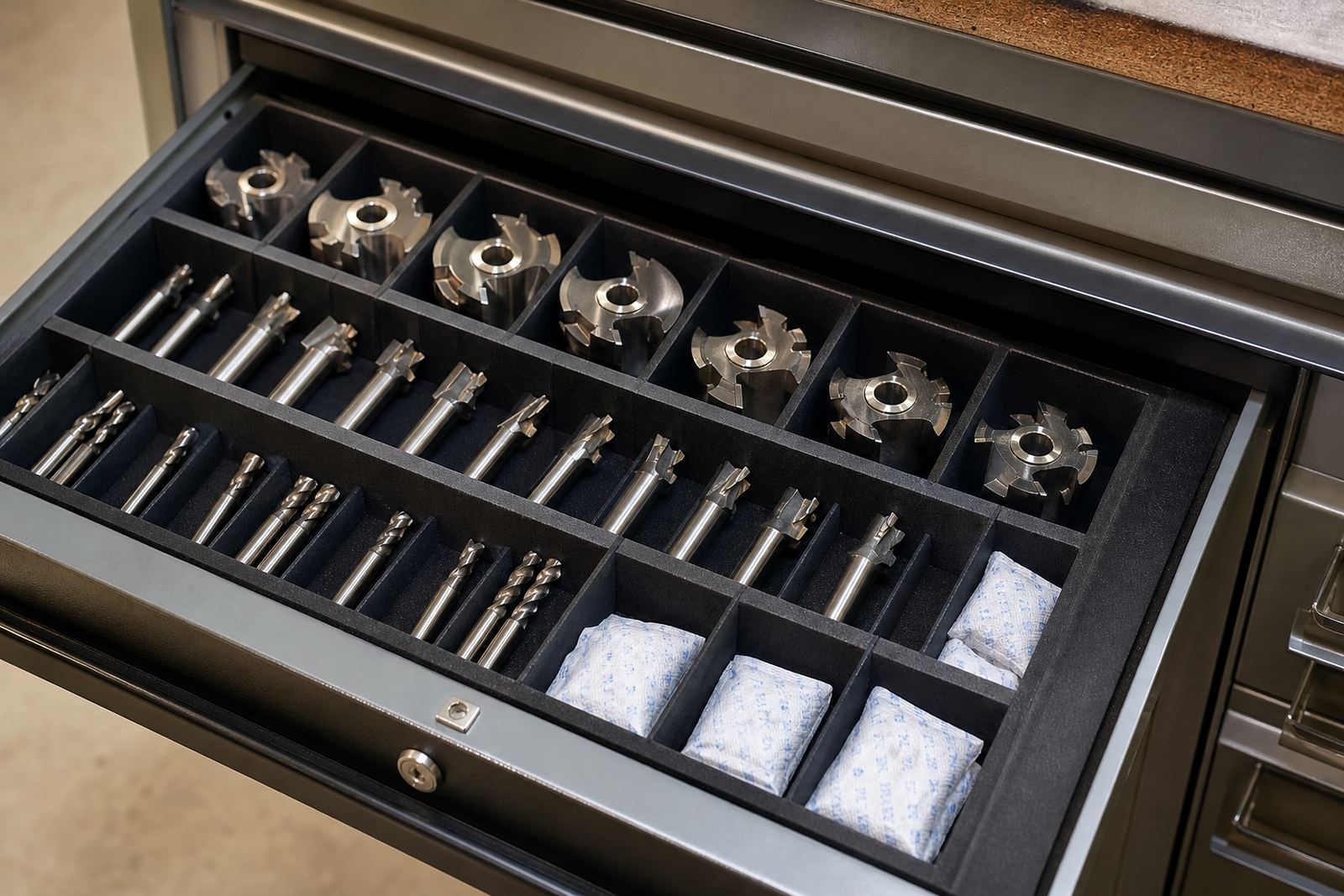
Start by separating each type of tool so nothing rubs against anything else in the box. Saws, drills and router bits should be grouped by type and condition, because a chipped blade edge should not sit loose beside good stock or fresh sharpened pieces.
Check what needs attention before collection. If you have mixed jobs, make a simple note for each batch: saw blade sharpening, drill sharpening, router bit sharpening, burn mark removal, diameter correction or angle resetting. That note helps our workshop team handle the tools in the right order when they arrive in Pinetown.
- Keep saw blades in one stack
- Keep drills in a separate container or sleeve
- Keep router bits wrapped and labelled by size
- Set aside any badly chipped or burnt pieces for inspection
2. Clean off dust, pitch and oil first
A quick clean makes packing safer and helps us inspect the cutting edge properly. Wipe off dust, resin, metal swarf and excess oil before sealing anything up. If tools arrive caked in glue or swarf, they can mark each other during courier transport, especially on longer routes between Durban and Johannesburg.
Use a dry cloth for most tools. If there is heavy pitch on saw blades, remove the loose build-up carefully and let the blade dry fully before packing. For drills and router bits, make sure the flutes and edges are free of loose debris. Moisture trapped in a parcel can lead to light rust, which is a nuisance on the coast and inland alike.
- Wipe each tool dry
- Remove loose resin, pitch and dust
- Check for oil seepage before wrapping
- Let wet tools air dry before sealing the parcel
3. Wrap every item so metal cannot move
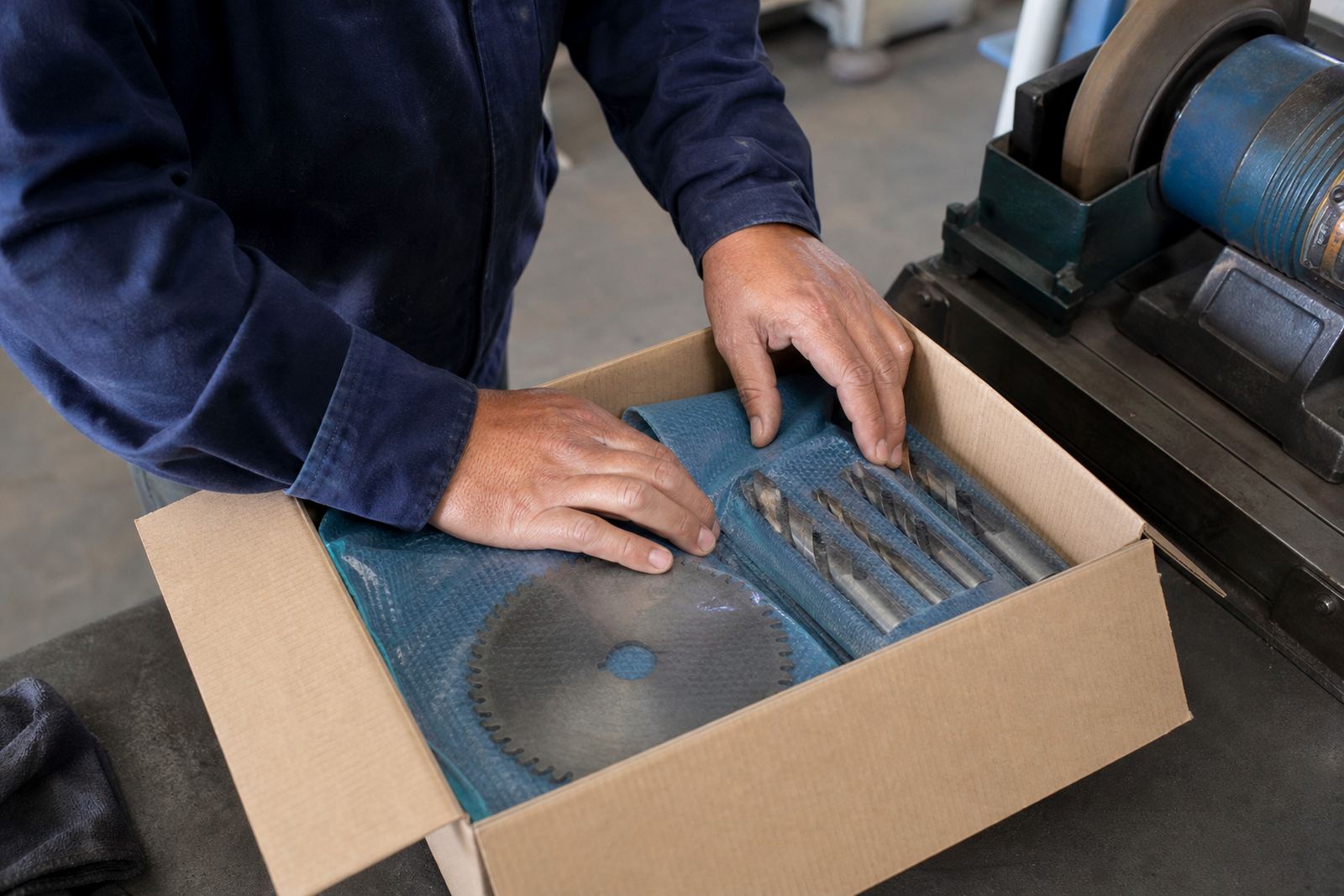
The main aim is simple: stop metal from touching metal. Use paper, cardboard sleeves, bubble wrap or foam between each item. For circular saw blades, place a layer of cardboard on both sides of the blade and tape it firmly so the teeth cannot catch the package. For smaller bits and drills, use a sealed bag or a divided box so they do not rattle around during collection and linehaul.
Never throw loose tools into a box. That is how teeth get damaged, shanks bend and sharp edges chip. If you are sending a mixed batch, wrap each tool as if it will be turned upside down during the trip, because couriers may load and unload parcels more than once.
- Use cardboard discs for circular saw blades
- Wrap router bits individually
- Keep drills in sleeves or a partitioned tray
- Fill empty spaces so nothing shifts
4. Choose a box that will survive courier handling
Select a strong box with enough depth for padding on all sides. Thin supermarket cartons do not hold up well once a parcel is stacked under other freight. A double-walled box is better for heavy or high-value tools, especially if you are sending a full batch from Pretoria, Cape Town or Pietermaritzburg.
The parcel should not bulge at the top or sides. If the box closes under pressure, the contents are probably packed too tightly. If it rattles, the tools need more filling. Aim for a snug fit, not a forced one.
- Use a box with a firm base
- Add padding around every side
- Avoid overfilling or leaving loose gaps
- Seal all seams with packing tape, not masking tape
5. Label the parcel clearly for collection
Clear labelling helps the courier and the workshop team identify your parcel quickly. Mark the outside with your name, suburb, town and a short description of what is inside. If the box contains more than one customer job from a business, keep each batch separated inside and include one note per batch.
Where possible, add the order details on a sheet inside the box as well. That way the job can still be matched if an outer label gets rubbed or torn in transit. This is especially useful for regular trade clients sending weekly or monthly tool batches from Westville, Hillcrest and surrounding areas.
- Write your name and suburb on the box
- Include a short contents note
- Place a copy of your job details inside
- Use batch tags if you are sending several sets
6. What to include with the tools
A good parcel tells us exactly what work you need done, which saves time once the tools reach the workshop. If you need only sharpening, say so. If the tool needs regrinding, balance checking or chipped edge recovery, state that clearly. If you are unsure, mention the problem and the team can assess it.
For mixed business orders, include a simple note with the tool count and preferred turnaround. If the tools are for a production line, mention whether they need matching diameters, consistent angles or a specific finish across the batch. That kind of detail helps us return the tools ready for use, without back and forth later.
- Your name or company name
- Contact details on the enquiry form reference
- Tool type and quantity
- Service needed for each batch
7. Before handover, do one final safety check
Walk through the parcel once more before the courier arrives. Make sure no blade teeth are exposed through the box, nothing moves when you lift it, and every side is taped properly. If the parcel feels unstable, reopen it and add more packing rather than hoping for the best.
For heavy or sharp sets, ask yourself whether you would be happy to stack the box under other freight. If not, it needs more support. A few extra minutes at packing stage saves time, cost and damaged tools later. That is worth it, especially when load-shedding or busy workshop hours already put pressure on the day.
- No exposed sharp edges
- No movement inside the box
- Labels are readable
- Box is sealed and ready for collection
Once packed, send your collection request through the enquiry form on our contact page. Our courier collection team arranges pickups across Pinetown, Durban, Pietermaritzburg, Johannesburg, Pretoria and Cape Town, and we can also assist clients in surrounding areas like Westville and Hillcrest.