What We Sharpen on Circular Saw Blades
Our saw blade sharpening service is set up for workshop blades used on timber, sheet material and light non-ferrous applications. That includes general purpose circular blades, ripping blades, crosscut blades, combination blades and carbide tipped blades that have lost their edge through daily use, heat and resin build-up. We work on blades brought in by hobbyists, joinery shops, cabinetmakers, contractors and production teams that need consistent cutting and less waste at the cut line.
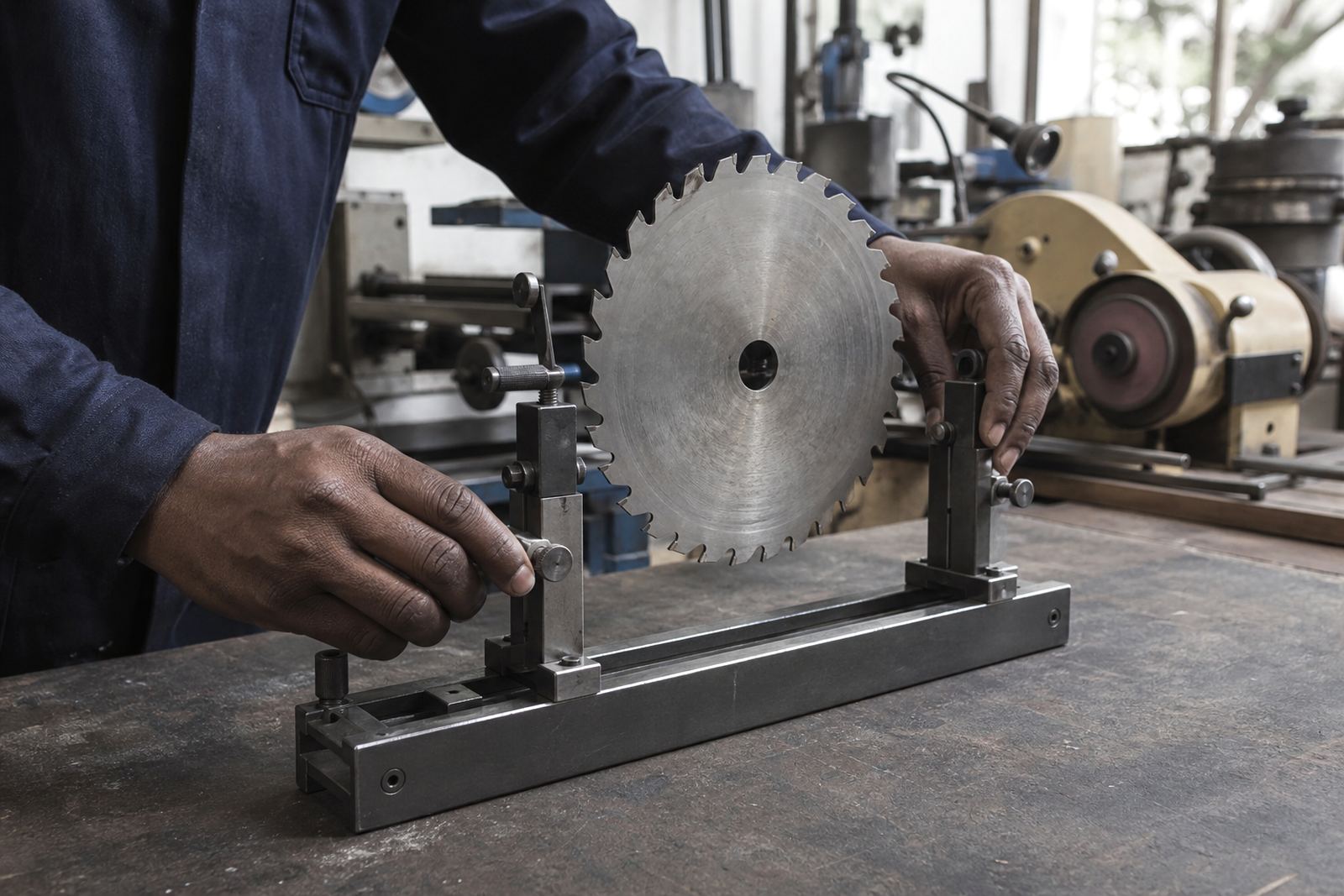
Each blade is inspected before any work starts. We look at the tooth condition, plate flatness, hook angle, side clearance, set and any signs of burning, chipped tips or impact damage. If a blade is beyond normal sharpening and needs diameter correction, tooth face grinding or balance checking, we will tell you first so you know exactly what is being done and why.
- Timber cutting blades
- Board and panel blades
- Light aluminium and non-ferrous blades
- Carbide tipped circular blades
- Blades with minor burn marks, dull tips or uneven wear
How the Sharpening Process Works
We keep the process practical and traceable. Once your blade reaches our Pinetown workshop, it is logged, tagged and checked against the requested service. That helps when you send in a batch from a site in Durban, a workshop in Pretoria or a small shop in Cape Town where multiple blade sizes come in together. Batch tool tagging is useful where blades are shared across teams and need to go back to the right machine, no guess work.
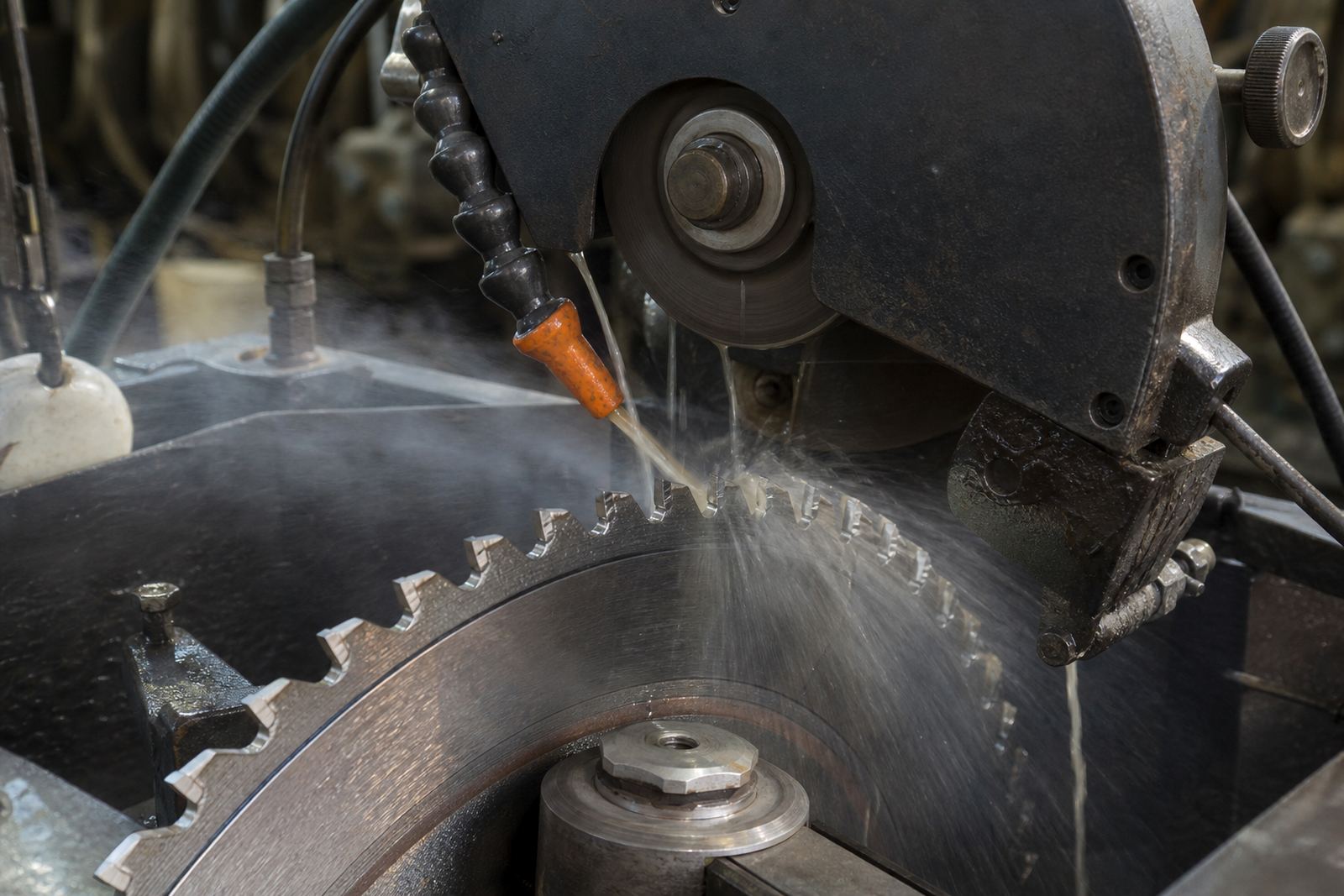
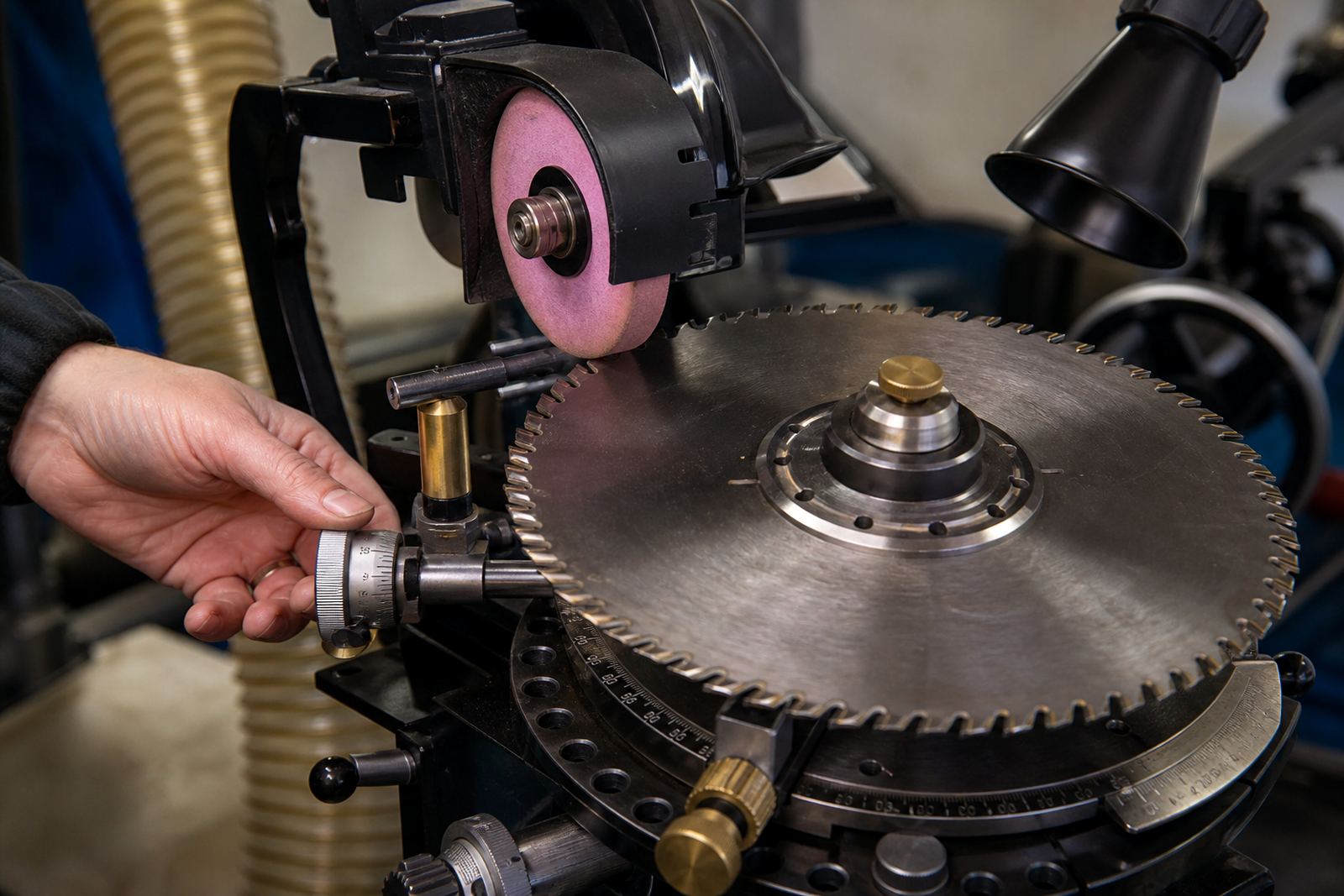
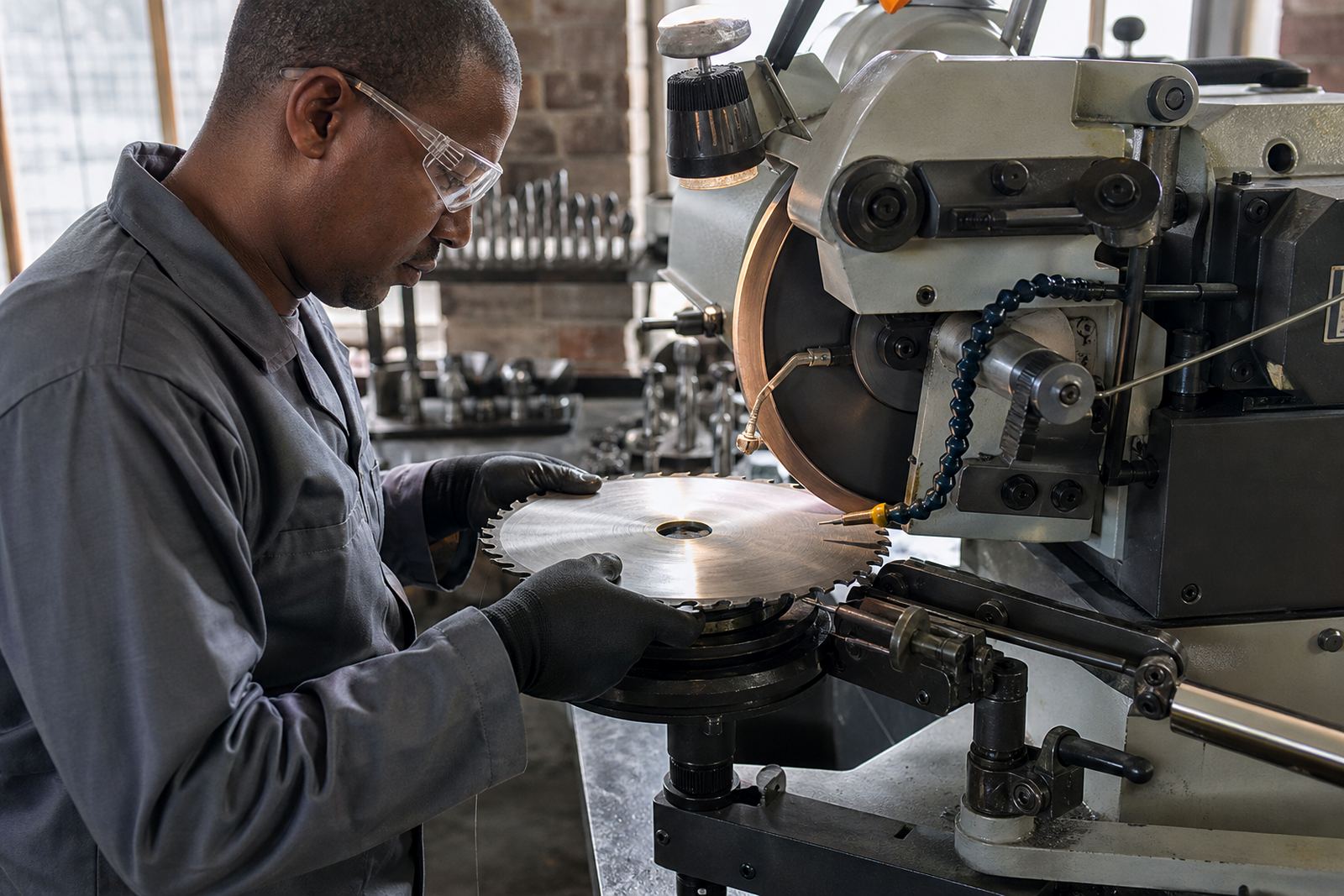
Sharpening is done tooth by tooth using the correct grinding profile for the blade type and material use. We restore the cutting edges, check the rake and face condition, and remove light burn damage where needed. If the blade has been running hot, we may also perform top grinding to bring the edge back evenly across the full set. The aim is a cleaner cut with less strain on the machine and operator.
- Check in and blade identification
- Condition inspection and service confirmation
- Tooth-by-tooth sharpening
- Burn mark removal and corrective grinding where needed
- Final check for consistency, balance and edge quality
Specs and Blade Details We Work With
We handle common workshop blade sizes and specifications used across South Africa. Most jobs are on carbide tipped circular saw blades, with blade diameters typically from 180 mm up to 600 mm, depending on condition and tooth profile. We also work on blades with varying tooth counts, from coarse rip blades through to fine finish blades for cleaner edges on board material.
For the best result, please send blades without heavy pitch build-up or loose segments if possible, although we do clean and assess each item on arrival. If a blade has chipped teeth, we can often recover it with angle resetting, chipped edge recovery or diameter correction where there is enough material left. On coastal jobs, especially from Durban and other humid areas, we see more rust spotting and resin set, so early maintenance helps a lot.
- Blade diameters: 180 mm to 600 mm typical
- Tooth forms: flat top, alternate top bevel and similar workshop profiles
- Material: carbide tipped and other serviceable circular blades
- Applications: timber, board, panels and light non-ferrous work
- Condition issues: dull edges, chipped tips, burn marks, uneven cutting
Turnaround Times for Local and Courier Work
Turnaround depends on the blade condition, quantity and whether any corrective work is needed beyond standard sharpening. Simple jobs are usually turned around quickly, while blades needing regrinding, diameter correction or balance checking take a bit longer. For regular workshop customers, we also plan batches so you can send blades in together and reduce downtime on the floor.
Courier collection is available across South Africa, with active collection support for Pinetown, Westville, Hillcrest, Durban, Pietermaritzburg, Johannesburg, Pretoria and Cape Town. If you are in a coastal area and the blades are going back into service fast, we recommend not leaving them idle in damp storage, especially during load shedding or over a wet weekend. A dry wrap and proper storage makes a difference.
- Standard sharpening for serviceable blades
- Extended turnaround for corrective grinding work
- Courier collection arranged from multiple major centres
- Batch handling for workshops with repeat demand
Pricing Approach for Blade Sharpening Jobs
We price saw blade sharpening according to blade size, tooth count, condition and the amount of rework needed. A blade that only needs routine sharpening is priced differently from one that needs burn mark removal, chipped edge recovery or diameter correction. This keeps pricing fair and tied to the actual work, rather than charging a flat amount for every blade that lands on the bench.
If you are sending in a mixed batch, we can separate the items and quote by category so your maintenance costs are easier to track. Workshops that keep records by machine, job type or blade life cycle often find this useful, because it shows when a blade should be sharpened before it starts affecting cut quality. It also helps with planned maintenance and stock control.
- Quoted by size, tooth count and condition
- Extra work priced only when needed
- Batch pricing available for repeat customers
- Useful for workshop maintenance records and cost control
Keeping Blades in Service Longer
Good maintenance starts before the blade is blunt. Clean the resin off regularly, keep blades dry, and store them flat or hung properly so the plate stays true. In humid parts of KwaZulu-Natal, moisture can creep in fast, so a blade that sits in a toolbox overnight may already be showing surface rust by morning. That leads to extra wear and can shorten the useful life of the blade if it is ignored.
As a guide, many users send blades for inspection after they notice slow cutting, heavier feed pressure or burn marks on timber and board. For busy shops, a planned interval based on running hours and material type works better than waiting for visible failure. We also offer training and starter kits for teams that want a better routine for care, safe handling and day-to-day blade maintenance. It keeps the blades sharper, the cuts cleaner and the workshop moving.
- Clean resin and pitch often
- Store blades dry and flat
- Inspect after burn marks or rough cuts appear
- Use planned intervals for high use workshops
Key facts
| Service area | Pinetown, Durban, Westville, Hillcrest, Pietermaritzburg, Johannesburg, Pretoria and Cape Town |
|---|---|
| Blade type | Circular saw blades for timber, board and light non-ferrous cutting |
| Typical diameter range | 180 mm to 600 mm |
| Core work | Tooth-by-tooth sharpening and corrective regrinding |
| Extra services | Burn mark removal, balance checking, diameter correction and chipped edge recovery |
| Collection method | Courier collection booking available nationwide |