The brief from a Gillitts timber yard
The client was a timber yard in Gillitts handling daily cutting for pine stock, shelving lengths and custom orders for local builders and furniture makers. Their cutting section needed sharper, cleaner saws because burn marks were starting to show on the cut face, and some blades were leaving a rough edge that needed extra sanding before dispatch.
They asked for a practical maintenance plan that would suit a medium-volume workshop, not just a one-off fix. The aim was to keep the blades cutting cleanly, reduce downtime and make sure the team could plan around sharpening instead of waiting until a blade was completely blunt.
- Site: Gillitts, KwaZulu-Natal
- Workshop base: Pinetown
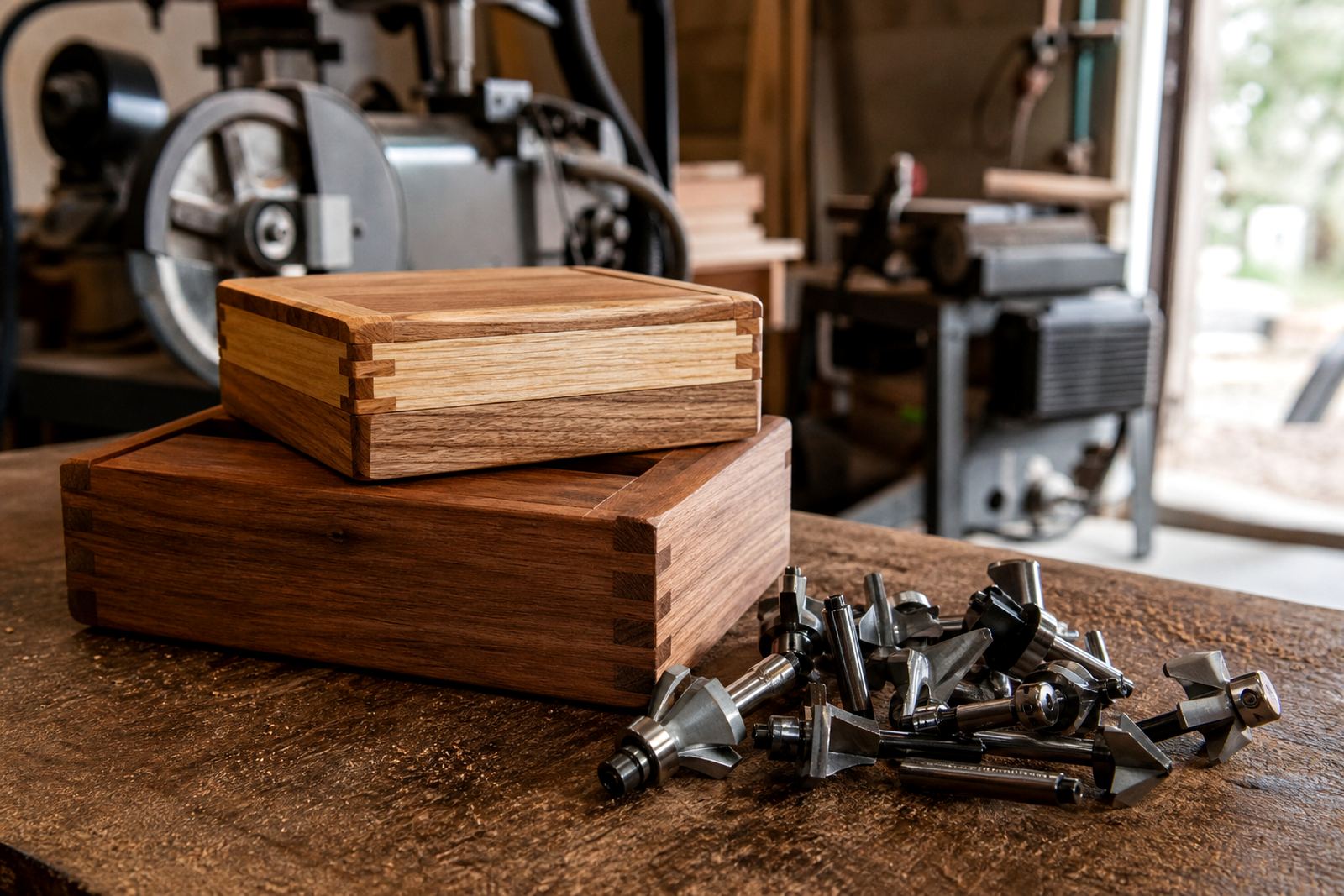
- Tools covered: circular saw blades and selected drill and router bits used in finishing work
- Service model: scheduled sharpening with courier collection and return
What was causing the burn and rough finish
The main issue was a mix of worn cutting edges, slight tooth damage and blade buildup from timber resin. In warmer weather, especially with humidity around the Upper Highway area, pitch can stick to the cutting edge and worsen the heat build-up. Once that starts, the blade does more rubbing than cutting, which shows up as burn marks and fibres lifting on the timber surface.
We also found that a few blades were running with uneven tooth faces and inconsistent top grinding, which made the cut feel rough even when the blade was still usable. On a timber line, that kind of wear can creep in slowly. One or two blades can seem fine, then suddenly the whole stack starts giving different results from one shift to the next.
- Signs noticed: burn marks, rough cut faces, extra sanding time
- Likely causes: resin buildup, dull edges, uneven tooth geometry
- Risk if left too long: more waste, slower output, shorter blade life
Our sharpening and regrinding plan
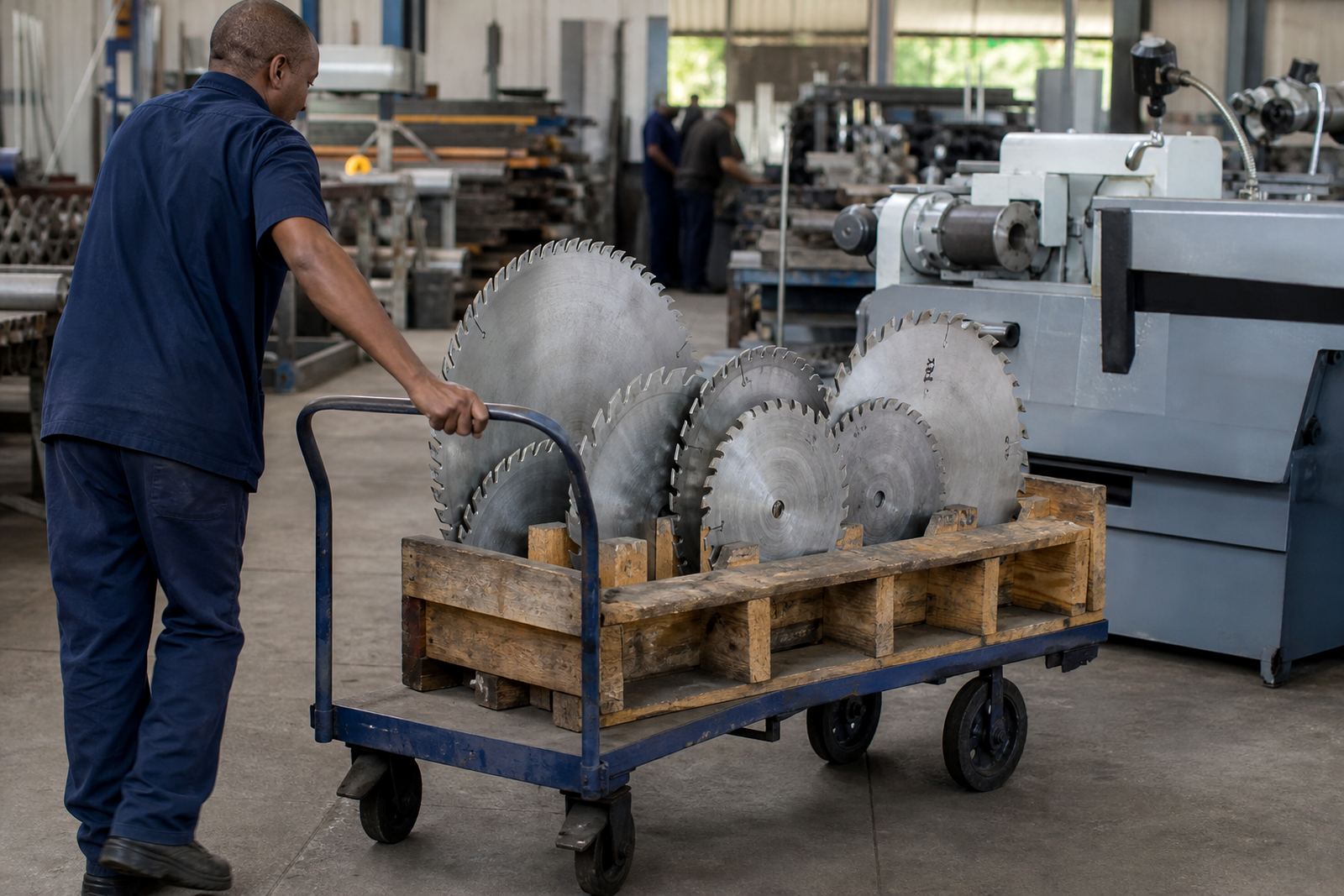
We started with a batch inspection and sorted the blades by condition. Reusable blades were marked for sharpening, while the ones with chipped teeth or uneven wear went for regrinding and corrective work. Where needed, we carried out tooth face grinding, top grinding and diameter correction so the set stayed consistent across the batch.
For the blades with heavier damage, we also did chipped edge recovery and angle resetting. That kept more tools in service rather than pushing the client to replace them too early. The client used batch tool tagging so each blade could be tracked through the process and returned in the same order it came in.
- Sharpening method: matched to blade condition and tooth type
- Corrective work: angle reset, balance checking, diameter correction
- Tracking: batch tool tagging for simple workshop control
Courier collection and turnaround from Pinetown
The yard did not want staff losing half a day driving tools in and out, so we arranged courier collection from Gillitts to our Pinetown base. That cut down on travel time and kept the workshop moving. Once the first batch was received, we completed the work within 1 week for the initial set and then moved onto a regular 2 week cycle for ongoing maintenance.
For a timber business, timing matters because the cutting section often works around stock deliveries, rainy spells and municipal noise limits on some sites. By booking collection in advance, the client could group tools into batches and avoid emergency downtime. It also meant fewer rushed jobs at the end of the week, when a blunt blade can be a costly surprise.
- Collection area: Gillitts and surrounding Upper Highway area
- Workshop location: Pinetown, KwaZulu-Natal
- Turnaround: 1 week initial batch, then 2 week service rhythm
- Logistics: courier collection booking and return delivery
Results on the cutting line
After the first service cycle, the yard reported cleaner cut faces, less burn on softer timber and less time spent sanding edges before packing. The saws also ran more smoothly under load, which helped the team keep feed speed more consistent through the day. That matters when a workshop is cutting a mix of lengths and cannot afford to slow every piece down.
The biggest gain was stability. Instead of waiting until a blade started smoking or dragging, the client had a schedule they could follow. That reduced sudden breakdowns and gave the cutting team confidence that the next batch would cut the same as the last one.
- Cleaner cuts with less visible burn
- Less roughness and reduced finishing time
- More predictable performance from batch to batch
What we would do again for a timber operation
For this kind of timber yard, we would keep the same service pattern: inspect, tag, sharpen, regrind where needed and return on a set schedule. It works well where saw blades are used daily and quality of cut must stay steady. A small maintenance plan saves money over time because it stretches blade life and reduces the pressure to replace tools too soon.
We would also keep a close eye on resin buildup and tooth wear during wetter months, then shorten the inspection interval if the site is cutting more treated timber or harder stock. For clients in Gillitts, Pinetown and Durban, that kind of timing is practical. It suits local workshop conditions, load-shedding planning and the need to keep production moving without unnecessary delays.
- Best fit: scheduled sharpening rather than emergency repairs
- Good practice: batch service with tool tagging
- Ongoing focus: edge condition, heat marks and balance checks
Key facts
| Project type | Timber yard cutting section maintenance |
|---|---|
| Location | Gillitts, KwaZulu-Natal |
| Service base | Pinetown workshop with courier collection |
| Tools serviced | Saw blades, drills and router bits |
| Timeline | 1 week initial batch, then 2 week cycle |
| Key outcome | Reduced blade burn and roughness on cut timber |