Why heat control matters when drilling metal
When a drill bit gets hot, the cutting edge softens and the point starts to rub instead of cut. That leads to blue tips, rough holes, extra burrs and faster wear, especially on mild steel, stainless steel and thick plate.
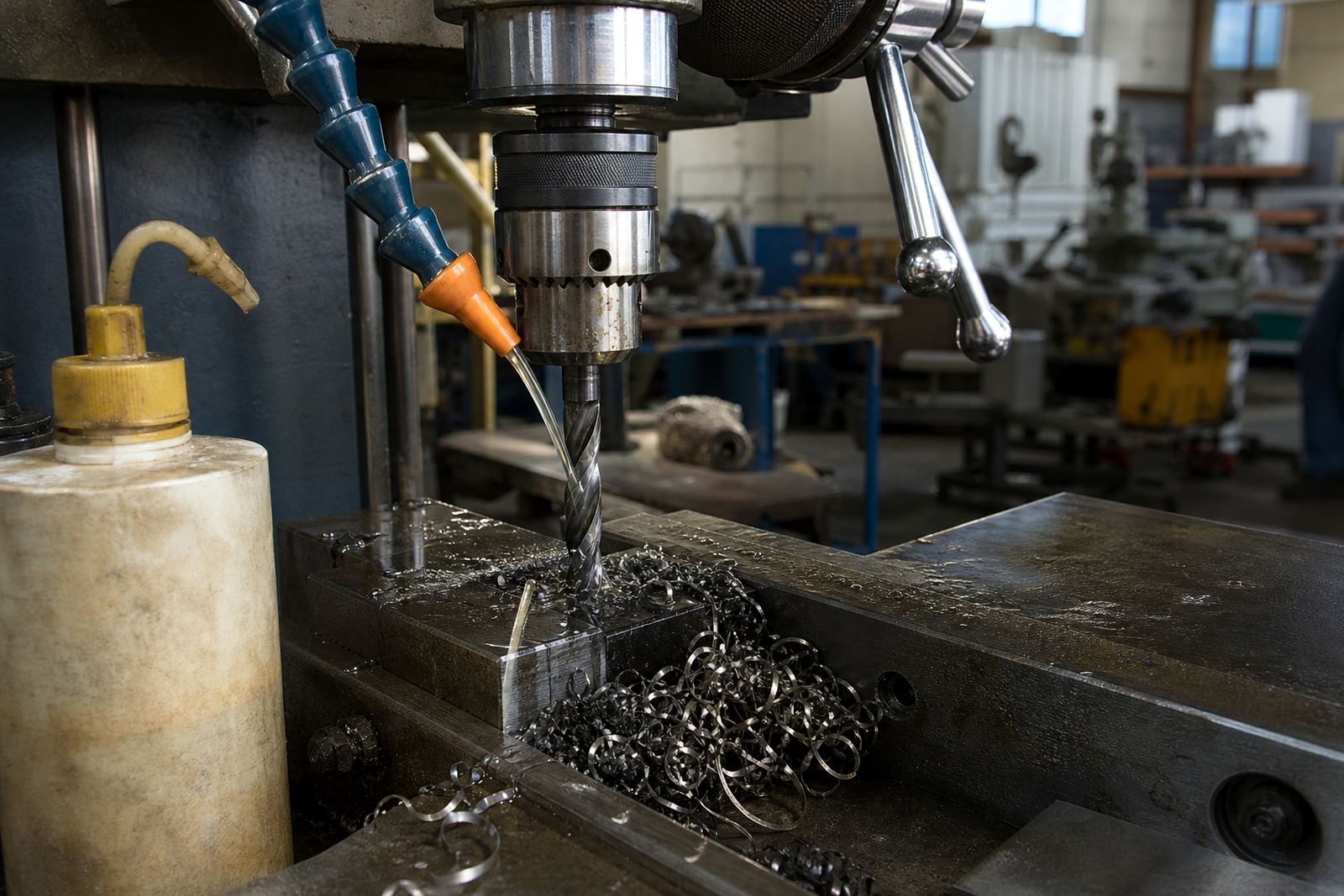
Coolant is not just about keeping things wet. It carries heat away from the cutting zone, clears chips, and reduces the friction that makes a drill grab. In a workshop in Pinetown or Durban, where humidity is high and jobs can stack up through the day, this matters even more because bits are often running hot before anyone notices.
The short version is simple: less heat means better edge life, steadier feed, and a cleaner finish. It also cuts the risk of burning a point so badly that a sharpening job turns into a regrind.
Picking the right coolant for the job
Not every drill job needs the same cooling method. The right choice depends on the material, hole size, drilling speed and how often you are repeating the cut. For a small workshop, the aim is usually practical and affordable, not fancy.
- Light oil works well on general steel work and hand drilling.
- Water based cutting fluid is useful for longer runs and batch drilling.
- Compressed air helps clear chips on some jobs, but it is not a full replacement for coolant.
- Paste or gel style lubricants suit overhead or portable work where liquid would drip away.
If you are drilling stainless steel, use a proper cutting lubricant and keep the feed steady. Stainless work-hardens fast. If the tool skates on the surface, the hole gets harder to start and the bit heats up quickly. For aluminium, lubrication helps stop chip build-up on the flutes, which can leave a poor finish and cause the bit to bind.
How to apply coolant without making a mess
Coolant only helps if it reaches the cutting edge. A quick splash before starting is not enough on its own. You need a method that keeps feeding the point through the cut, especially on deeper holes or harder materials.
On a drill press, use a controlled drip, brush-on application or a small pump system aimed at the tip. For hand drilling, pause now and then to reapply, then clear the chips. Do not flood the work area if the excess will wash chips back into the hole or into machine parts. That just creates more wear.
- Apply coolant at the start and during the cut, not only after overheating starts.
- Keep the flutes clear so chips can escape.
- Use enough to wet the cut, but not so much that the job becomes slippery.
- Wipe the tool after use, especially in coastal areas where rust can start quickly.
A small typo people make is thinking more fluid always means better cooling. Not so. If the tool is dull, no amount of coolant will fix poor geometry or a damaged edge.
Signs your drill is running too hot
Heat problems usually show up before the bit fails completely. A sharp drill should cut cleanly with steady pressure. If it starts squealing, smoking or leaving a glazed surface, something is off.
Watch for these signs:
- Blue or straw coloured edges on the bit
- Chatter marks or rough hole walls
- Burnt smell from the workpiece or swarf
- Excessive burrs on the exit side
- Loss of cutting speed even on light pressure
Once a drill has been overheated, it may still cut but not properly. The point can soften unevenly and the lips may lose symmetry. That is when a sharpening service has to check point angle, lip balance and edge condition before sending it back out.
A Pinetown workshop example from everyday work
Take a small fabrication shop in Pinetown drilling mild steel brackets for municipal fitting work. The team is pushing through a batch of holes for a site in Westville, and the operator keeps drilling dry because the job looks simple. After a few parts, the bit starts squealing, the holes pick up burrs, and the point goes blue. The operator assumes the drill is just worn out.
In many cases, the issue is heat more than age. Add a proper cutting fluid, reduce the speed a touch, and keep the feed steady. The same bit may hold up far better and produce a cleaner hole. If the point is already burnt, though, it often needs sharpening before it will perform again.
That is why shops that drill daily should treat coolant as part of normal kit, not as an extra. On hot summer days, or when load shedding interrupts workflow and machines get started and stopped often, bits can lose their edge quicker than expected.
Simple habits that extend drill life
Good coolant use works best alongside basic workshop habits. Even a well sharpened bit will struggle if the operator is forcing it through the job or ignoring chip clearing.
- Match speed to material and drill diameter.
- Do not push too hard if the bit is cutting freely.
- Back the drill out during deeper holes to clear chips.
- Check the cutting edge after repeated use.
- Store drills dry so moisture does not damage the tips.
For hobby users and professional teams alike, a few seconds spent on cooling and chip control can save money on replacements. It also gives a better finish, which matters when the job has to fit cleanly first time.