What We Accept for Sharpening and Regrinding
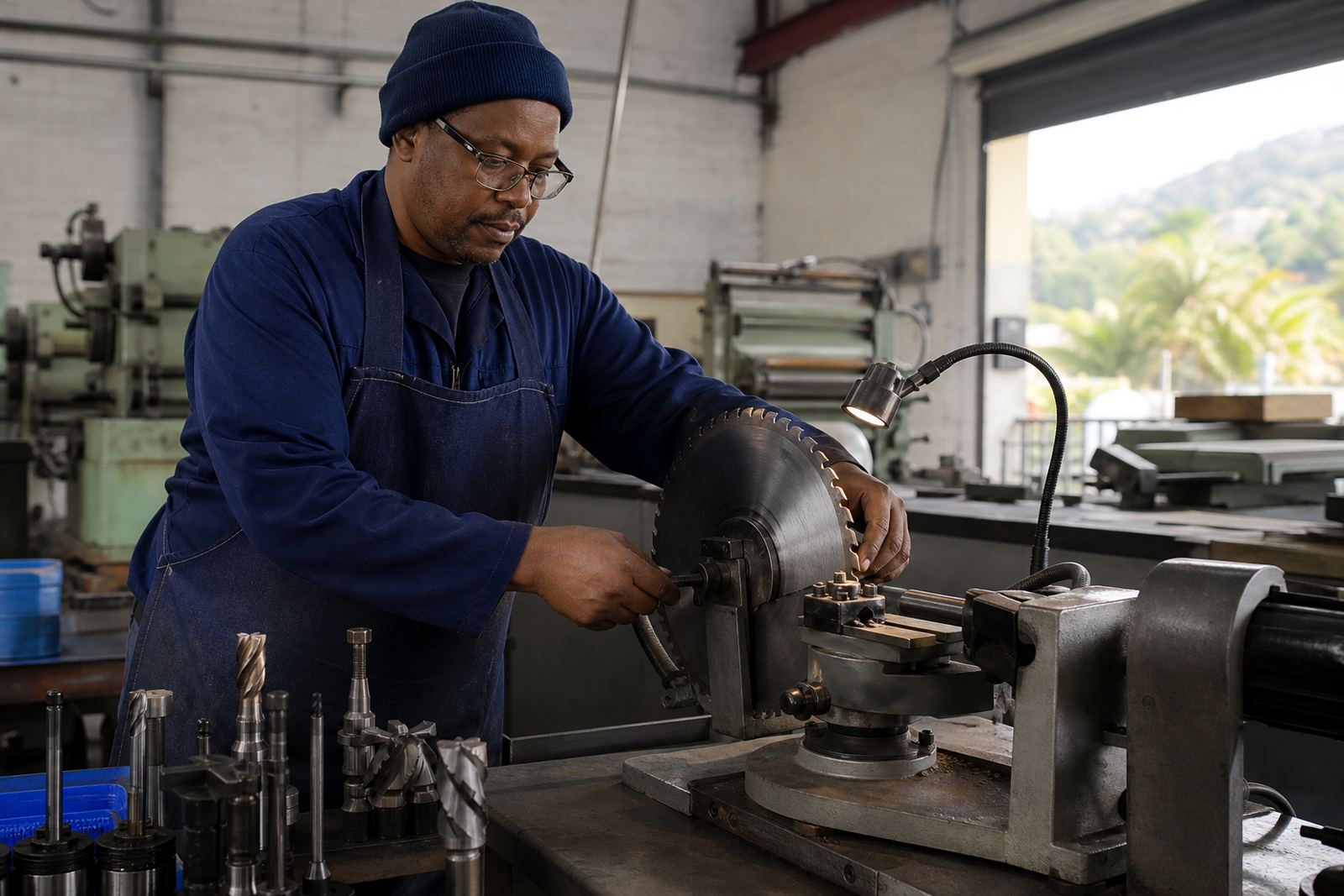
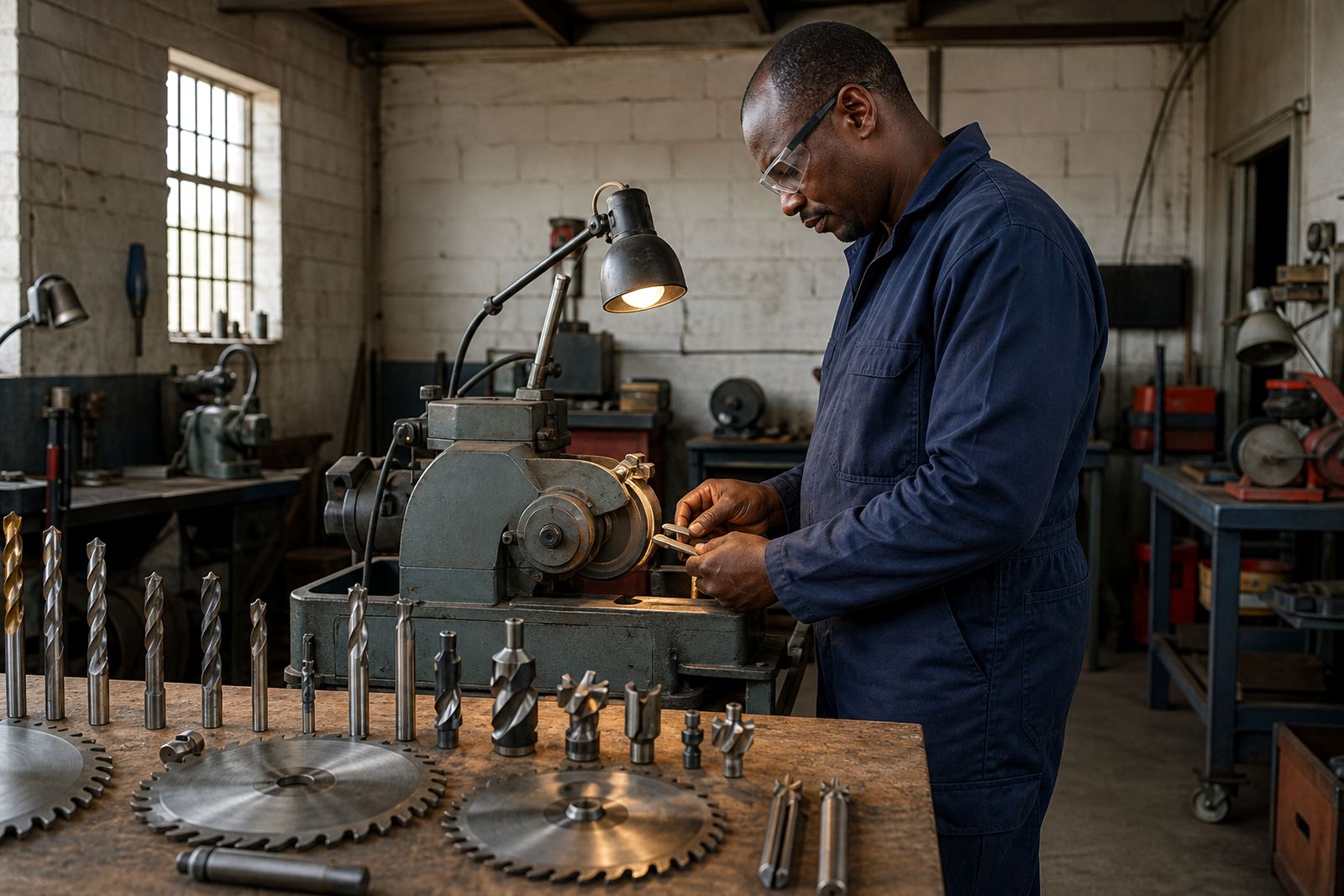
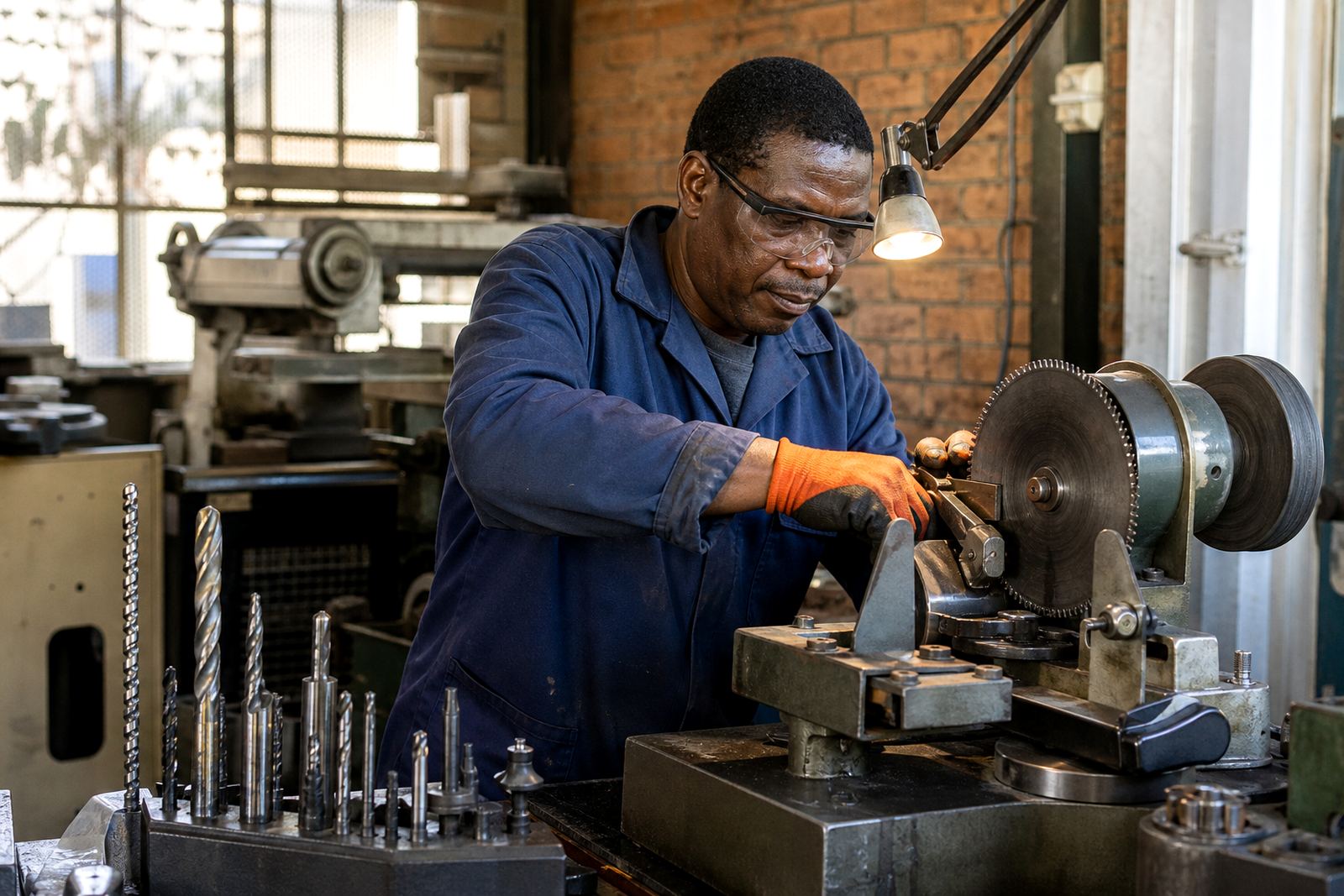
We work on saw blades, drills and router bits used in workshops, joinery shops, fabrication bays and home tool kits. Tools must be within a condition that allows safe handling and assessment. If a tool is badly bent, cracked, missing sections or has heat damage beyond recovery, we will advise on the next step before any work is carried out.
- Conventional saw blades and circular saw blades
- Drills in common workshop sizes
- Router bits with sound bodies and cutting edges
- Grouped batches for trade jobs or maintenance runs
Tools should be cleaned enough for inspection. Heavy oil, resin build-up or embedded dust can slow the intake process and may affect how quickly we can confirm the work required.
How the Inspection Process Works
Every job starts with an inspection at our Pinetown workshop. We check cutting edges, tooth condition, run-out signs, diameter, balance and any damage that may affect performance. For saw blades, we look for burn marks, chipped teeth and uneven wear. For drills and router bits, we check edge shape, point geometry and any signs of overheating.
If the tool needs more than simple sharpening, we note the extra work before proceeding. This may include tooth face grinding, top grinding, diameter correction, burn mark removal, chipped edge recovery, angle resetting or balance checking. Where a tool is not suitable for further service, we will say so plainly and avoid unnecessary work.
Courier Collections Across South Africa
Customers in Durban, Pietermaritzburg, Johannesburg, Pretoria, Cape Town, Westville and Hillcrest can book courier collection through our contact page enquiry form. We also handle returns once the job is complete. The same process applies whether you are sending one blade or a full batch from a production workshop.
- Complete the enquiry form with your tool list and collection area
- Wait for confirmation before sending items
- Pack tools securely so cutting edges cannot move or rub together
- Include your name, contact details and any job notes inside the parcel
In coastal areas like Durban and Cape Town, tools can pick up surface corrosion quickly if they are left unwrapped. A dry pack and proper padding helps keep them in better condition during transit.
Turnaround, Load-Shedding and Workshop Scheduling
Turnaround depends on job size, condition and current workshop queue. Smaller sharpening jobs may move faster, while large batches and damaged tools need more time. We also work around load-shedding and courier collections, so timing can shift if power interruptions affect machinery or transport handovers.
We plan work in batches to keep tools moving through the inspection, sharpening and final check stages. If there is an urgent production need, let us know at enquiry stage and we will advise whether the schedule can accommodate it. Where a delay is likely, we will communicate that early rather than leave you guessing.
Training and Starter Kits
We offer training and starter kits for customers who want better day-to-day tool care in the workshop. Training covers basic maintenance, safe handling, storage, identifying wear and understanding when a tool should be sharpened or reworked. Starter kits are suited to small workshops, hobby users and teams setting up a maintenance routine for the first time.
- Basic maintenance guidance for saws, drills and router bits
- Tool handling and storage advice for humid or dusty work areas
- Signs of wear that should be reported early
- Simple routines for extending cutting life between services
Training is handled by our team in Pinetown and can be aligned with the type of tools you use most often.
What to Expect After Service
Once the work is complete, each tool is checked before release. We look at edge quality, overall finish and whether the item is ready for reuse. If a tool has had diameter correction or balance checking, the final condition is noted so you know what was done. Batch jobs can also be marked with tool tagging for easier sorting on your side.
Please inspect returned tools promptly. If anything does not match the job notes, raise it through the contact page enquiry form as soon as possible. Keep tools dry and stored properly after return, especially in coastal or high-humidity areas where surface rust can form quickly.