Which cutting tools can you send in for sharpening?
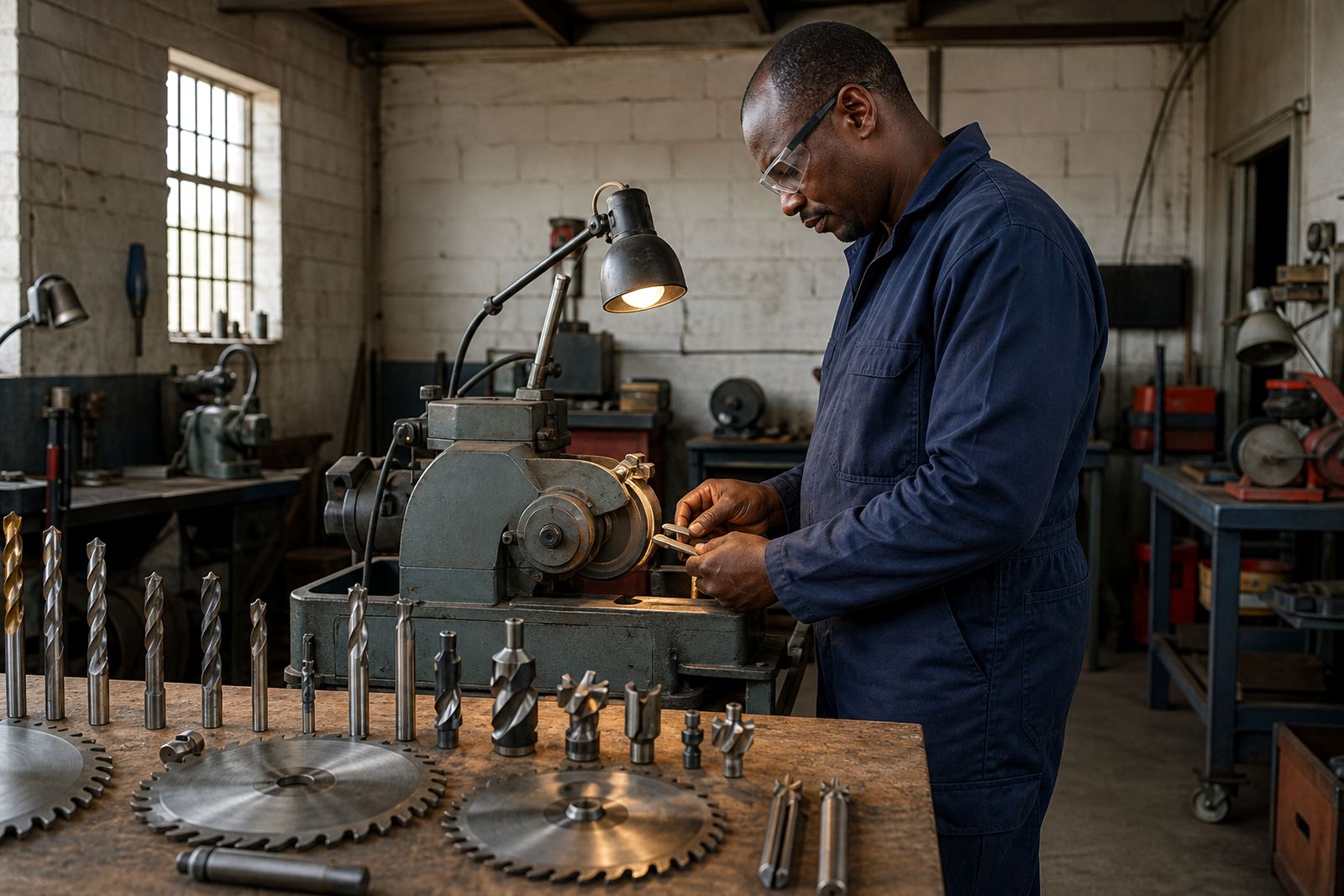
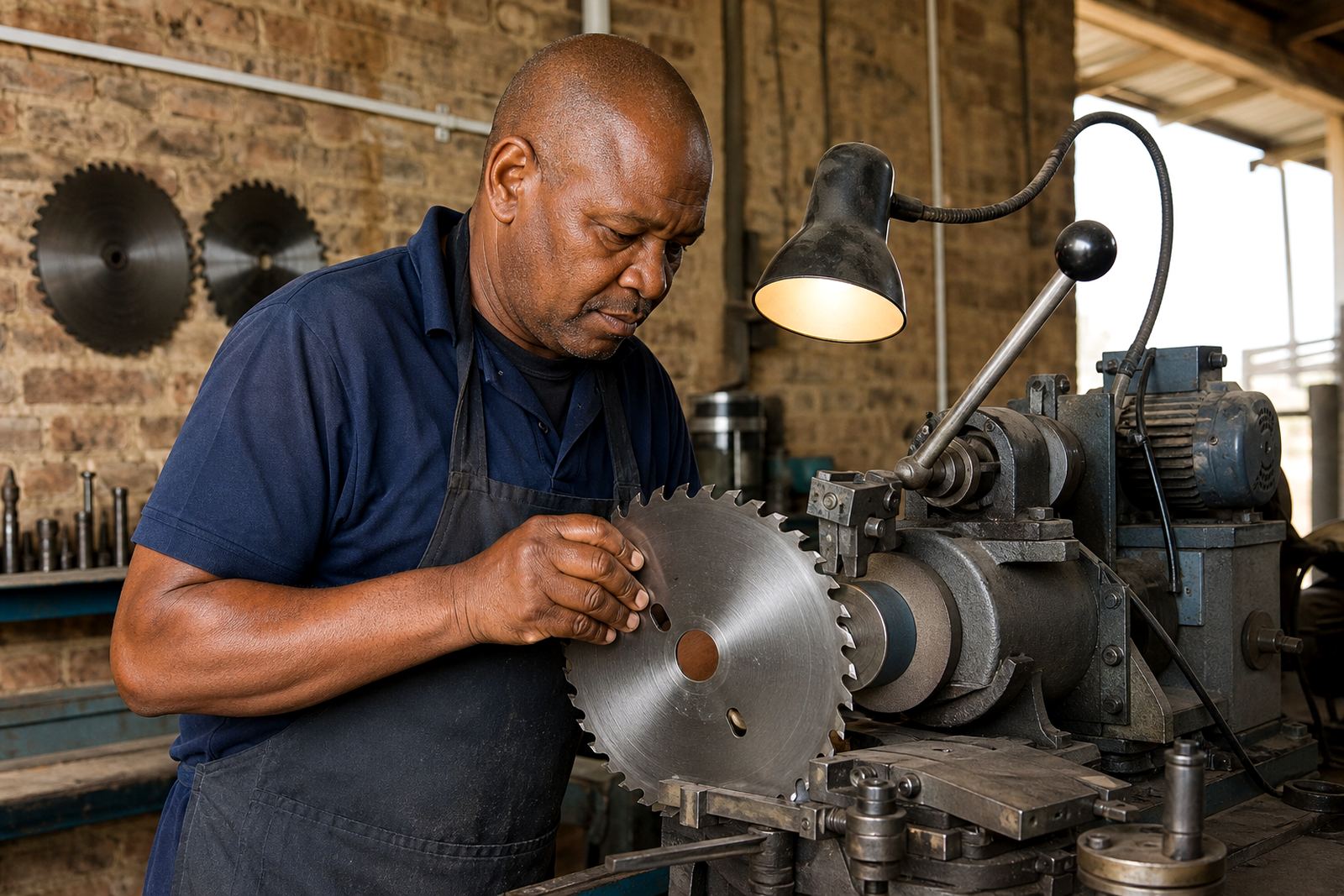
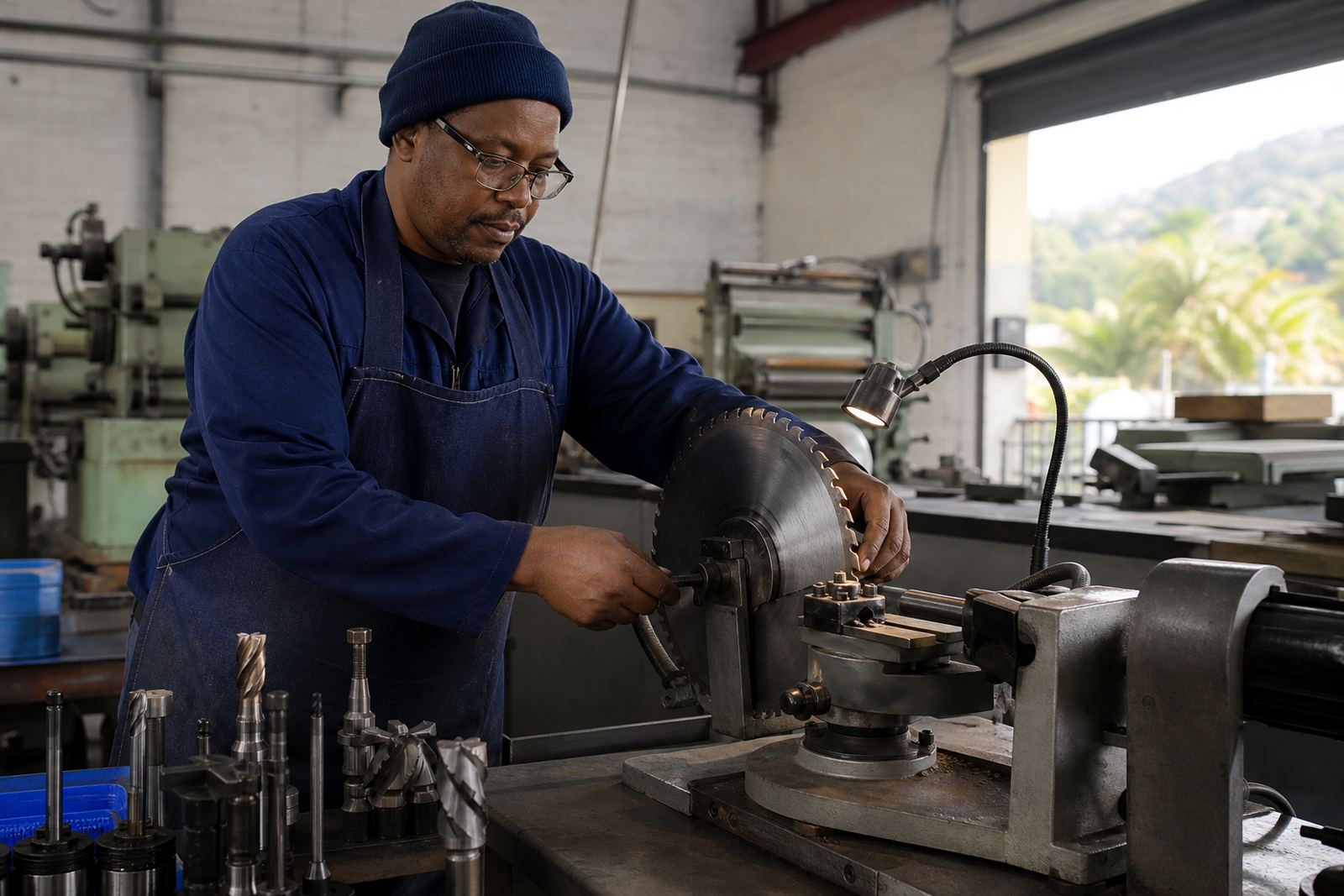
We work on saw blades, drill bits and router bits for hobby users, joiners, contractors and production workshops. We also handle regrinding work where the cutting edge needs more than a light touch-up, including tooth face grinding, top grinding, angle resetting and balance checking.
If a tool has chipped edges, burn marks, uneven wear or poor cutting performance, it is usually worth sending it in for inspection. In many cases a tool that looks finished can still be brought back into service with the right regrind. That can save money, especially when you are running a busy workshop in Durban, Pietermaritzburg or Johannesburg and you do not want unnecessary downtime.
- Saw blade sharpening and regrinding
- Drill sharpening for worn tips and blunt edges
- Router bit sharpening for clean cutting and better finish
- Diameter correction and chipped edge recovery
How do I book courier collection from my area?
You can reach us through the enquiry form on our contact page and we will confirm the collection details with you. Courier collection is available across South Africa, including Pinetown, Westville, Hillcrest, Durban, Pietermaritzburg, Johannesburg, Pretoria and Cape Town.
When you send the enquiry, include the type of tools, estimated quantity and your location. If the tools are going from a factory floor or a shared workshop, it helps to tell us whether they are loose, boxed or still tagged. That lets our team set up batch tool tagging before the collection leaves. We keep the process straightforward, with clear collection instructions and no fuss.
- Complete the enquiry form on the contact page
- Tell us what tools need sharpening or regrinding
- Share your town, suburb and preferred collection day
- Wait for confirmation before handing the parcel to the courier
What is the best way to pack tools for collection?
Packing matters because sharp edges and loose items can damage each other in transit. Wrap saw blades so teeth do not rub against each other, keep drill bits separated where possible, and secure router bits so shanks and cutting edges do not knock together. If you are sending a mixed batch, place the items in a strong box with enough padding to stop movement.
For coastal areas like Durban and other humid parts of KwaZulu-Natal, wipe tools down before packing so surface moisture does not sit on the metal during transit. If the parcel is coming from a site with dust, timber offcuts or cutting fluid on the tools, give them a quick clean first. It makes sorting easier when the batch arrives in Pinetown and reduces confusion during intake. A little care here saves time later.
- Use a rigid box, not a thin bag
- Separate blades, bits and loose accessories
- Pad the box so nothing shifts around
- Label the parcel if there are several tool types inside
How long does sharpening usually take?
Turnaround depends on the tool type, the condition of the cutting edge and the size of the batch. A few worn drill bits may move quickly, while a mixed load of saw blades, router bits and regrinding work can take longer because each item needs to be checked properly. If there is burn mark removal, diameter correction or balance checking involved, that adds extra handling time.
For regular workshop customers, the quickest jobs are usually those with clear tagging and a proper description of what each tool needs. If you are running against a deadline and need to plan around load-shedding, production changes or site work, tell us upfront so we can advise on the likely sequence. We do our best to keep things moving without rushing the finish.
Turnaround can also vary during busy periods, especially when collection volumes are high from Durban, Pretoria or Cape Town. The best approach is to book early and send everything together where possible.
What happens when the tools arrive at the workshop?
Once the parcel reaches our Pinetown workshop, we check the items against the booking details and sort them by type. If batch tool tagging has been requested, each item is kept with its matching job details so there is less chance of mix-ups. This is especially useful for larger shops that use many similar cutters.
Each tool is then assessed for wear, chipped edges, bluntness, run-out and any other visible issue. Some items need only sharpening, while others require regrinding or correction work. If a tool cannot be restored safely, we will flag it during the process. That way you know exactly what has been done before the parcel goes back out.
- Goods received and checked against the booking
- Tools sorted by type and condition
- Sharpening, grinding or correction carried out
- Completed items prepared for return courier
Do you help with training and starter kits?
Yes, we also support customers who want to learn proper tool care and maintenance. Some workshops just want a refresher on handling, storage and routine checks, while others need a starter kit for basic upkeep. This is useful for new operators, small businesses and home users who want to get more life out of their cutting tools.
Training can cover practical handling, how to spot wear before it becomes a problem, and how to prepare items for collection. Starter kits are suited to those who want the right basics on hand for tool care between sharpenings. If you are in Westville, Hillcrest or anywhere else in the region, you can ask about this when you send your enquiry. We will point you to the right option for your needs.