Router bit sharpening that keeps the cutter profile true
Router bit sharpening is not only about making the edge sharp again. The profile, cutting angle, clearance and balance all matter, especially on bits used for cabinetry, joinery, sign work and repeated production runs. We handle straight bits, profile bits, flush trim cutters, rebate cutters and most carbide-tipped router bits used in South African workshops.
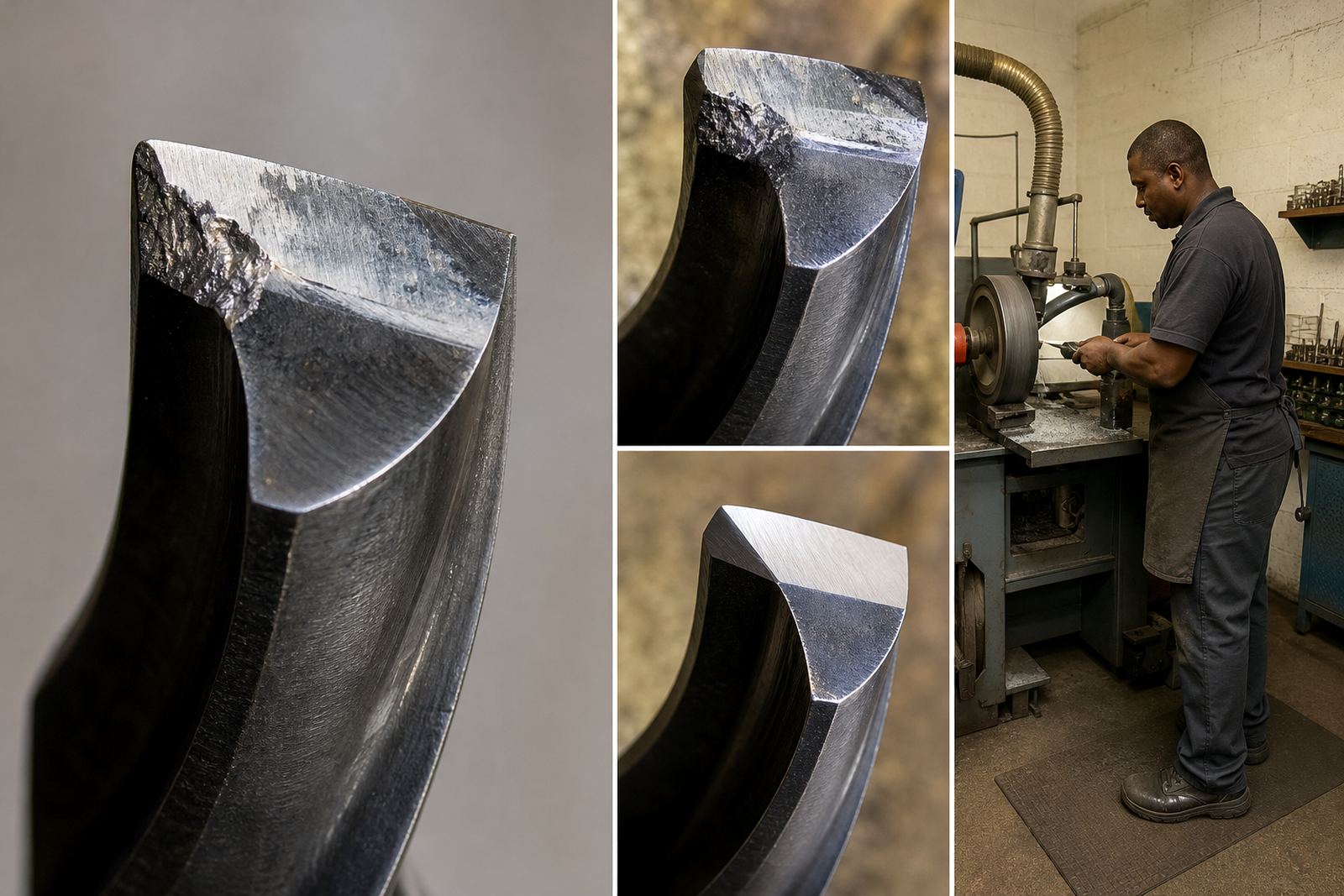
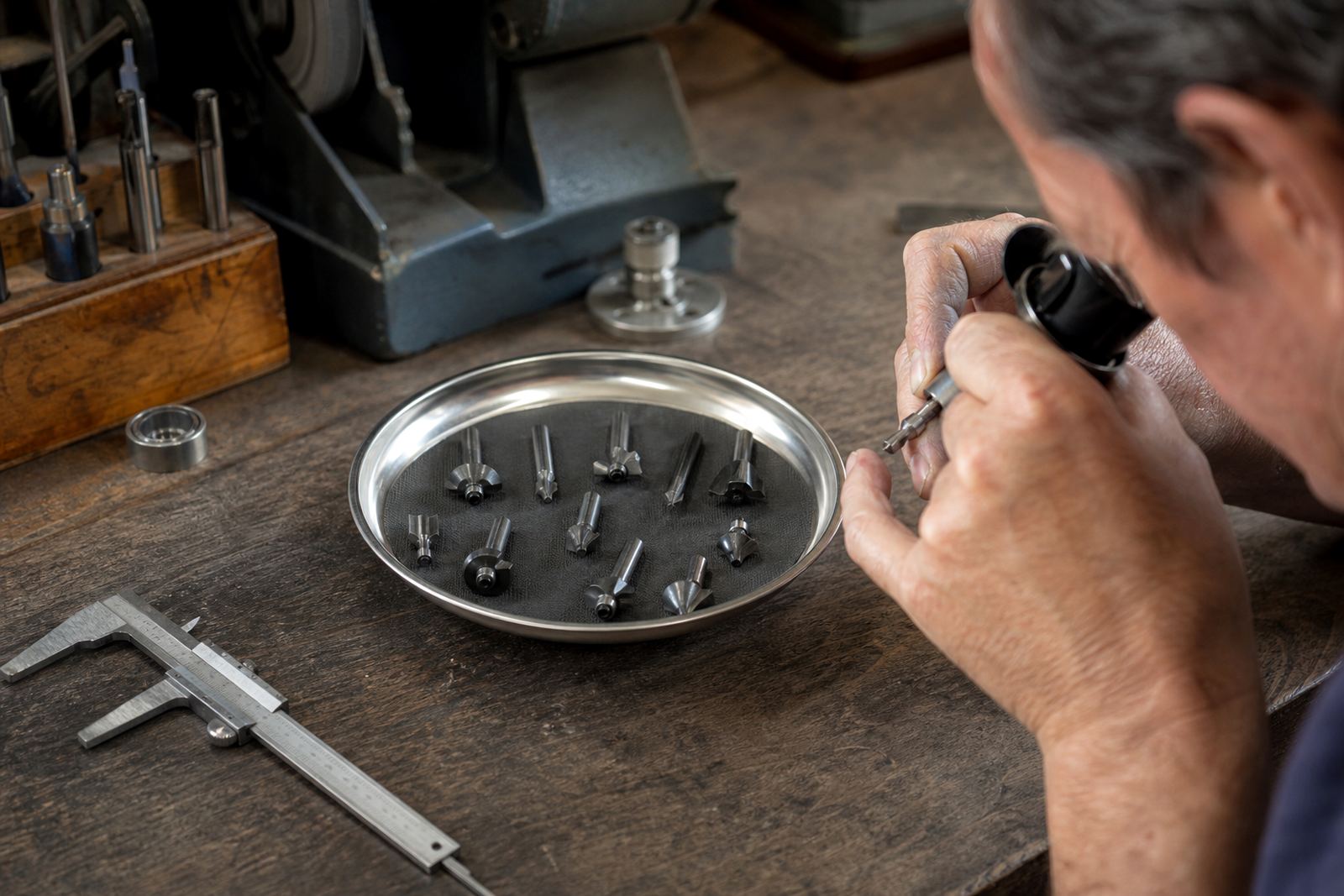
Every bit is checked before any grinding starts. We look for chipped tips, heat damage, resin build-up, uneven wear and shank damage. If a bit has lost too much material, we will advise on diameter correction or whether it is still worth saving. Our aim is to keep the cutter working as close as possible to its original shape, because a bit that cuts cleanly saves time on sanding and rework.
What is included in the service
Each router bit is assessed and treated according to its condition. Where possible, we clean the cutter, remove pitch and resin, then sharpen the cutting faces with controlled grinding. If needed, we also do edge recovery on light chipping and re-establish the cutting angle. On profile bits, the main task is preserving the form so the cut still matches the job and does not leave scallops or burn marks.
- Visual inspection and wear check before grinding
- Resin removal and basic cleaning where needed
- Carbide edge sharpening and regrinding
- Profile retention checks on shaped bits
- Burn mark reduction where heat has dulled the edge
- Balance checking for smoother running
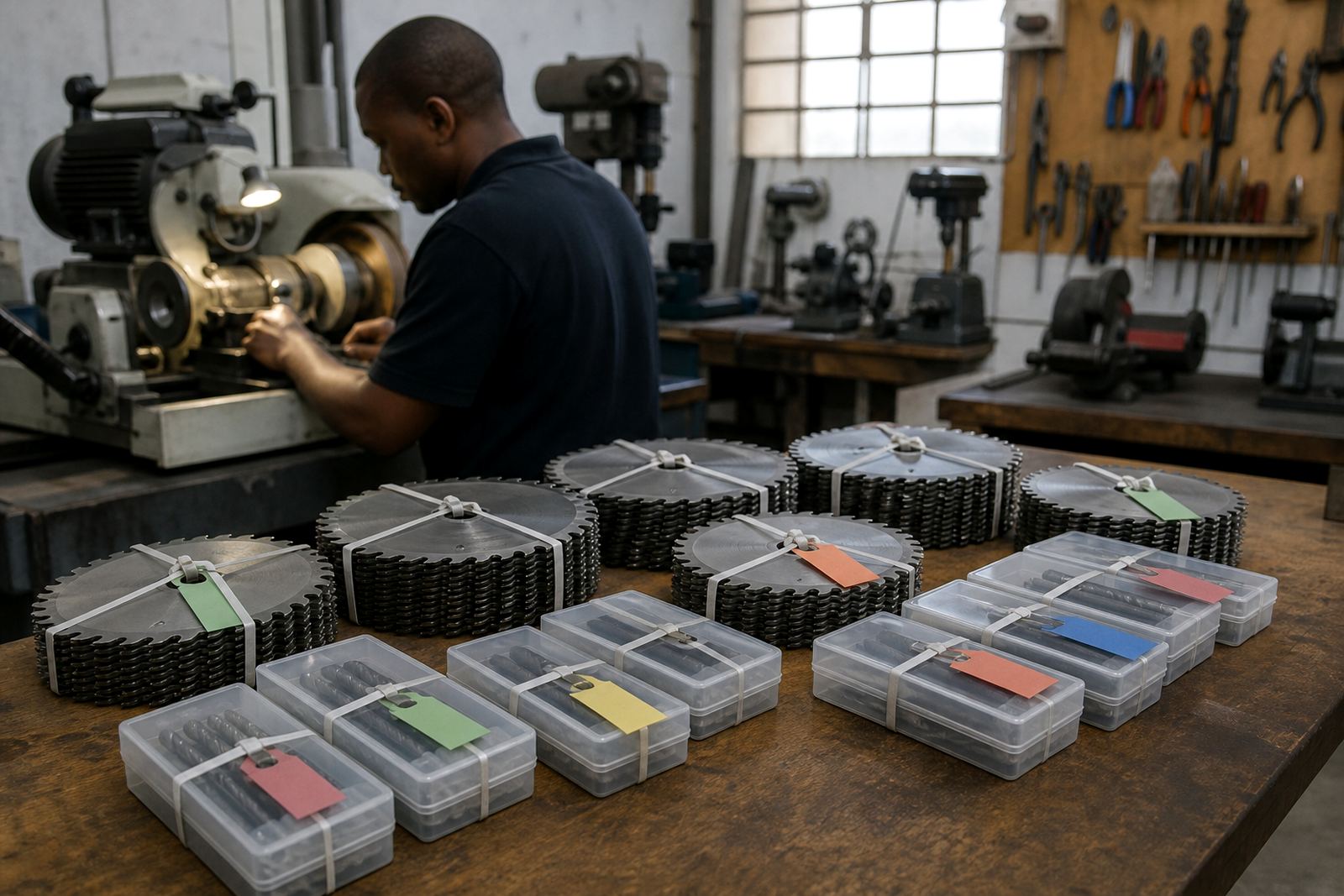
- Batch tool tagging for mixed workshop loads
We can also separate mixed batches for different machine rooms or job cards, which helps when a business sends in 20 or 30 bits at once.
Our sharpening and regrinding process
Bits arrive at our Pinetown base by drop-off or courier collection. Once they are logged, we sort them by type and condition, then carry out the relevant sharpening work. The cutting face is ground to restore sharpness while keeping the geometry consistent. Where the profile has drifted, we make careful corrections to reduce uneven cutting and chatter.
After grinding, each bit is inspected again for edge quality, concentricity and any signs of overheating. If a bit shows a burnt tip or a chipped edge, we will explain what has been done and whether it is suitable for further use. We do not rush this stage because a few extra minutes here can save a costly spoilage later.
- Receive and tag the bits
- Clean, inspect and sort by profile
- Sharpen or regrind with controlled stock removal
- Check balance and cutting consistency
- Return packed and clearly marked for the workshop
Turnaround times for single bits and batch work
Turnaround depends on the condition of the bits, the quantity and whether any profile correction is required. Simple sharpening jobs are usually quicker than damaged cutters that need extra attention. In many cases, small batches can be completed within 2 to 5 working days, while larger couriered batches may take a little longer if there is heavy wear or a high number of shaped bits.
For Durban and surrounding areas such as Westville and Hillcrest, courier collection makes it easy to keep the workflow moving. Clients in Johannesburg, Pretoria and Cape Town often send mixed batches from cabinet shops, maintenance teams and small manufacturing setups. We plan jobs in sequence so the workshop can keep running, even during load-shedding and busy periods.
Pricing based on bit type, wear and quantity
Our pricing is based on the type of router bit, the condition of the edge, the amount of regrinding needed and the number of pieces in the batch. A lightly dulled bit takes less work than one with chipped carbide or a damaged profile. Larger quantities usually work out better per piece, especially when the same cutter type is repeated across a set.
We quote after inspection so the price matches the actual condition of the tools. That way you are not paying for work you do not need, and if a bit is beyond economical repair, we will say so plainly. For regular trade customers, batch sorting and tagging helps keep the paperwork tidy and the return process simple.
How often to sharpen router bits
Maintenance intervals depend on timber type, feed rate, board material and machine setup. Bits used on hardwoods, abrasive board or high-volume runs usually need attention more often than cutters used for occasional hobby work. As a practical guide, a bit should be checked as soon as you notice burning, rough edges, extra pressure on the machine or a louder cut.
- Check after every heavy production batch
- Inspect sooner when cutting hardwood, MDF or resin-rich board
- Send for sharpening at the first sign of burn marks
- Do not keep running chipped bits, because they can damage the work and the machine
- Store cleaned bits dry, away from moisture and surface rust
If you work near the coast, such as Durban, moisture can affect storage and cause faster corrosion on shanks and steel bodies. A light oil wipe and proper storage make a real difference. In inland areas like Pretoria and Johannesburg, dust and poor storage are more common issues, so sealed containers help keep bits in better shape.
Key facts
| Service area | Pinetown, Durban, Westville, Hillcrest, Pietermaritzburg, Johannesburg, Pretoria and Cape Town |
|---|---|
| Router bit types | Straight, profile, flush trim, rebate and most carbide-tipped router bits |
| Typical turnaround | 2 to 5 working days for smaller batches, longer for heavy regrinds |
| Collection options | Courier collection across South Africa or direct workshop drop-off |
| Workshop base | Pinetown, KwaZulu-Natal |
| Core checks | Profile retention, edge sharpness, balance, chipped edge recovery and burn mark removal |