What Burn Mark Removal Covers
Burn mark removal is a corrective sharpening service for blades and cutters that are leaving dark lines, rough edges or a hot smell during cutting. In many cases the tool is still usable, but the cutting face has gone blunt, the teeth are uneven, or resin and heat have changed the way it bites into the material.
At our Pinetown workshop, we handle burn mark removal for saw blades, drill tools and router bits used in timber work, panel cutting, cabinet work and general workshop production. The process is aimed at restoring the cutting action, not just cleaning the tool. That means checking tooth condition, correcting the edge geometry and removing the parts of the blade that have been damaged by heat build-up.
- Assessment of heat damage and cutting performance
- Corrective sharpening to restore clean feed
- Regrinding for teeth that are uneven or out of profile
- Edge correction where the blade is leaving scorch marks
How We Diagnose Heat Damage and Rough Cutting
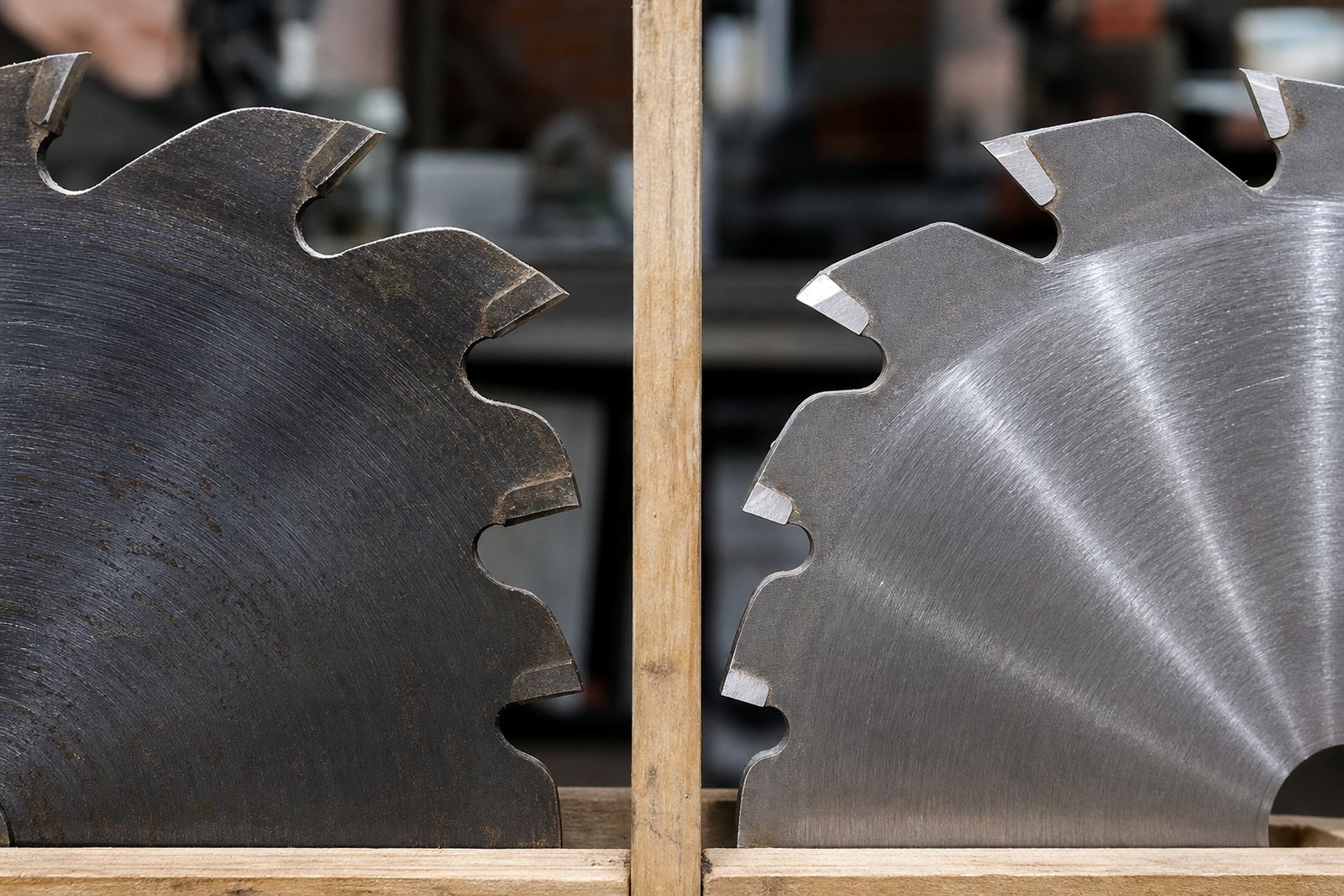
Heat damage is not always obvious to the eye. A blade can still look acceptable and yet start burning because the tooth face has gone dull, the blade is not balanced, or the cutting angle is no longer correct. We check for blueing, rounded edges, chipped teeth, resin build-up and signs of metal fatigue along the cutting line.
The aim is to identify whether the tool needs a light corrective sharpen or a more involved regrind. If the blade has been forced through knots, nails, dirty timber or dense board, the damage can be localised. If the burn marks are spread across the whole cut, the issue is usually more general and may need full tooth face grinding, top grinding and angle resetting.
- Visual inspection under workshop lighting
- Measurement of tooth consistency and edge wear
- Check for wobble, balance issues and set irregularities
- Review of previous sharpening patterns if the tool has been serviced before
The Corrective Sharpening Process We Follow
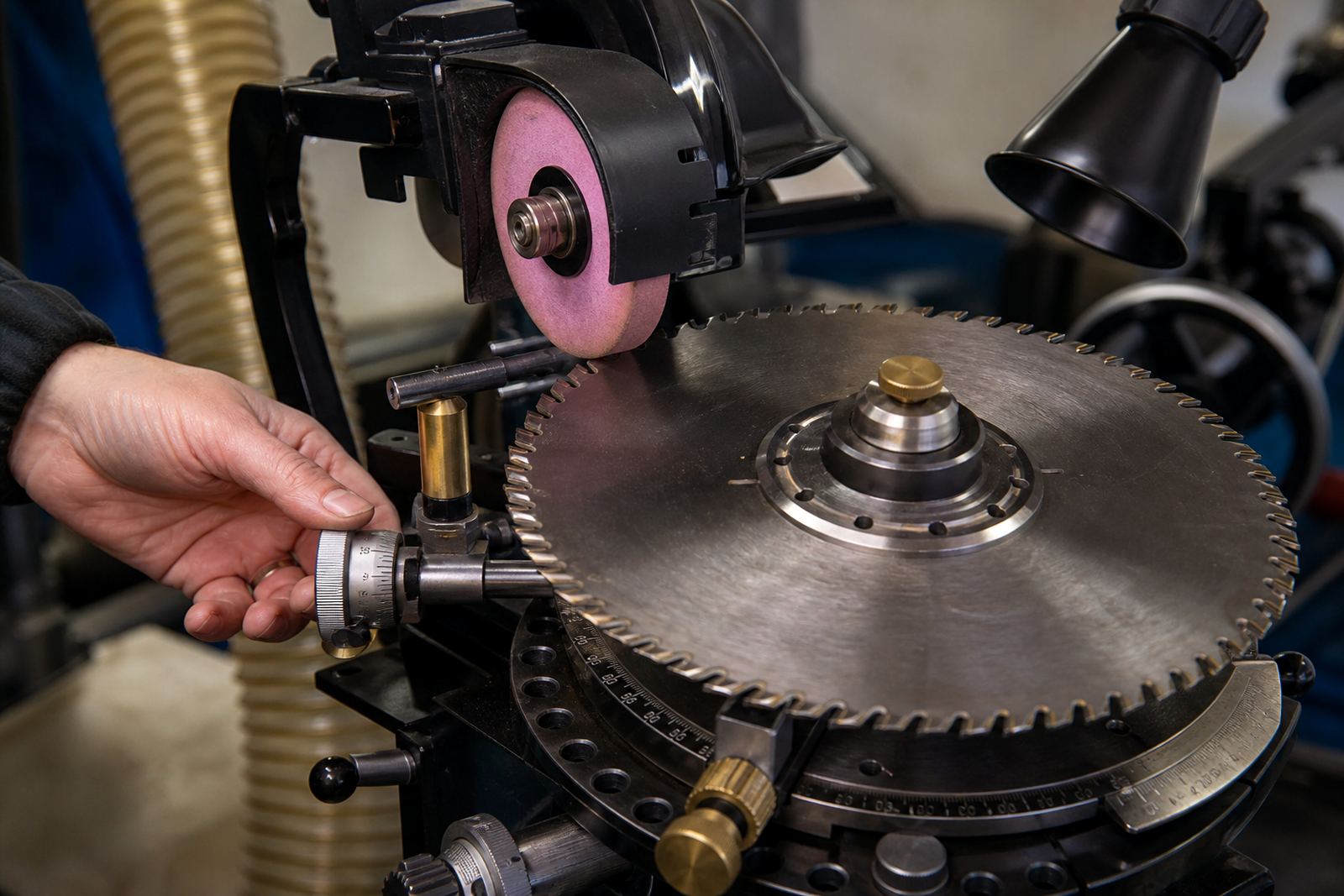
Once the blade is assessed, we strip away the heat-affected edge and re-establish the cutting profile. That can include controlled grinding to remove burnt sections, tooth face correction, top grinding and diameter correction where the blade has drifted out of specification. We work carefully, because taking off too much material shortens the life of the tool.
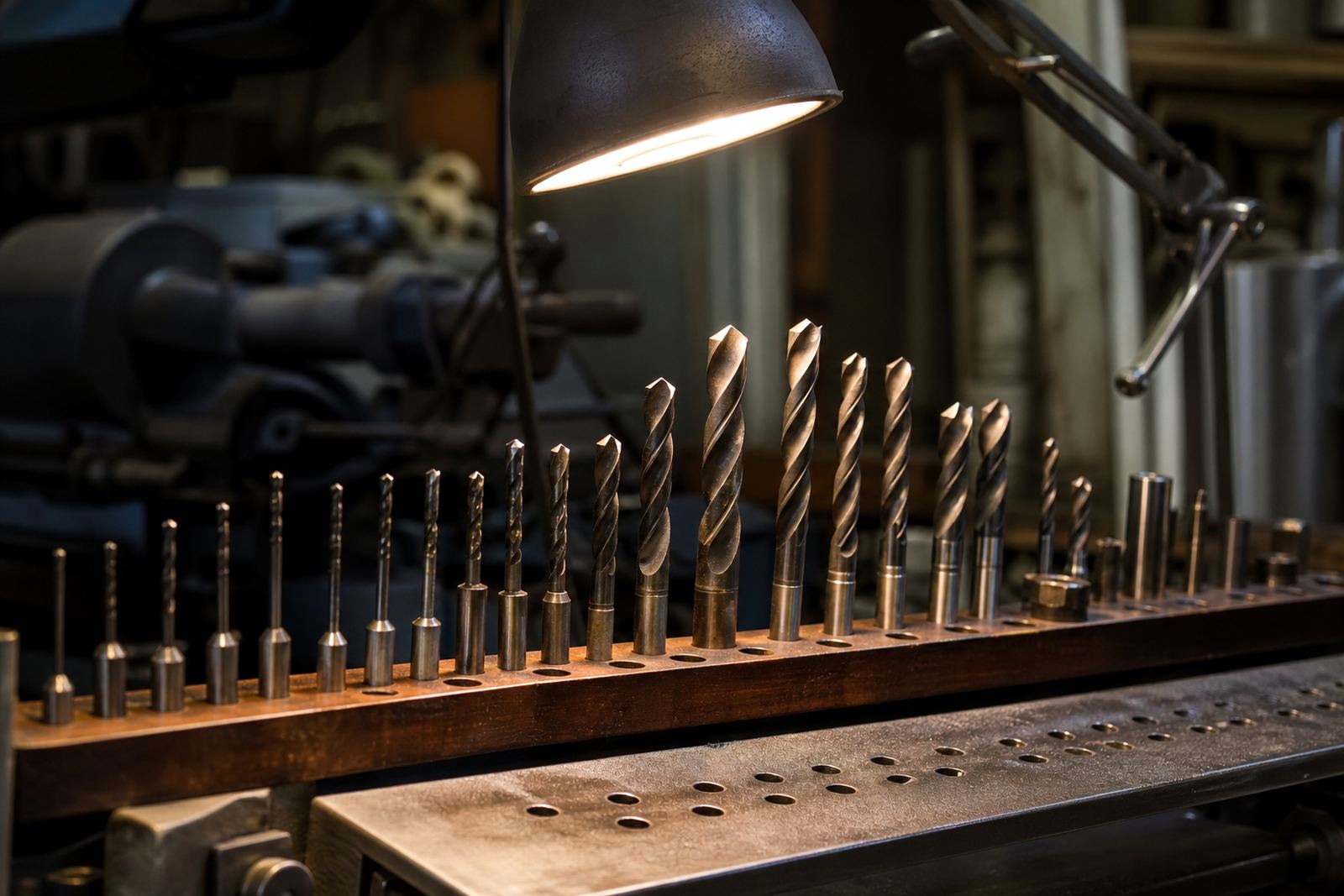
For router bits and drill tools, the process is similar but scaled to the size of the cutter and the job it is meant to do. Small cutters can overheat quickly, especially if they are used on hard timber or run too fast. Correct burn mark removal can make the difference between a clean finish and a job that needs extra sanding afterwards.
The final stage is a check on sharpness, symmetry and cutting contact. If a tool still shows signs of scorching after sharpening, we inspect again before it leaves the workshop. That extra check matters, because a blade that runs hot today often gets worse on the next job.
Turnaround for Pinetown and Courier Collections
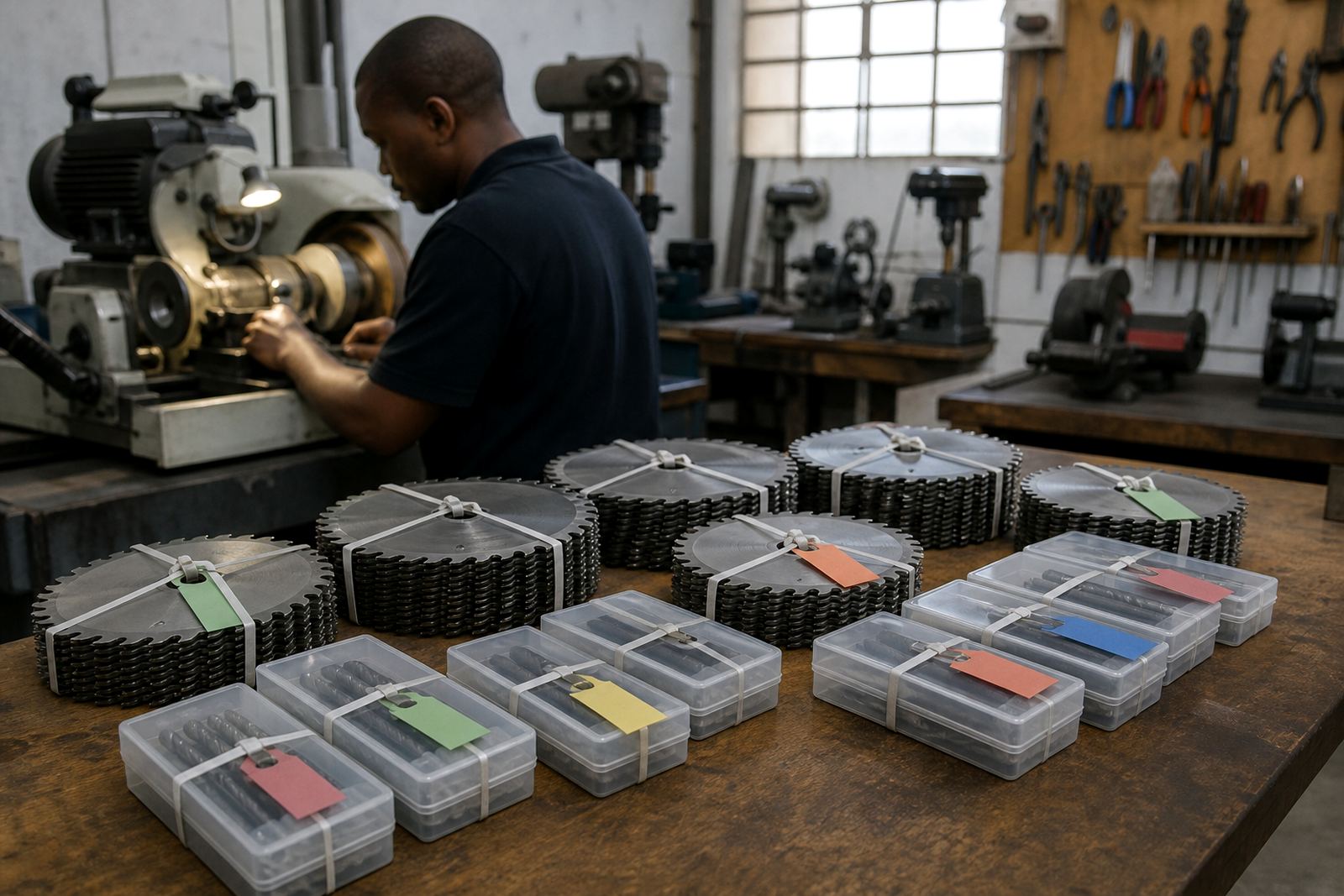
Turnaround depends on the condition of the tool and the number of items in the batch. A single blade with light burn marks can often be handled quicker than a mixed load of saws, router bits and drill tools requiring different correction methods. We work from Pinetown and arrange courier collection across South Africa, including Durban, Pietermaritzburg, Johannesburg, Pretoria and Cape Town.
For local clients in Pinetown, Westville and Hillcrest, collections are often arranged as part of a regular workshop drop-off. For clients further afield, the courier process is suitable for batch jobs and scheduled maintenance. During busy periods and when power cuts affect workshop timing, we keep clients informed so they know when to expect their tools back. Communication stays direct and practical.
- Light corrective work: usually faster turnaround
- Moderate heat damage: may need full regrind
- Batch work: arranged by quantity and tool type
- Courier jobs: collection booked through the enquiry form
Pricing Approach for Burn Mark Removal
Pricing is based on the tool type, the amount of material that must be removed, and whether the blade needs correction beyond standard sharpening. A lightly burnt saw blade is priced differently from one that needs diameter correction, chipped edge recovery and balance checking. We do not quote a flat rate before inspection, because two tools that look similar can need very different work.
When possible, we price by condition and batch size. That helps regular users manage workshop costs, especially if they run repeated cuts on board, hardwood or laminated material where heat build-up is common. If you send multiple tools together, we can often assess them as a set and recommend the most practical order of work. That keeps the cost of maintenance more predictable.
If a tool is beyond safe recovery, we say so plainly. It is better to retire a blade than keep paying for repeated repair on one that will not cut properly. That approach saves time and money in the long run, even if it is not the answer people were hoping for.
Keeping Blades Cooler Between Services
Burn marks often come back when the same working conditions are repeated. The best maintenance interval depends on the material being cut, feed rate, machine condition and the amount of daily use. In many workshops, blades are checked before the cut quality drops badly, rather than waiting for visible scorching. If the blade starts to squeal, drag or leave a brown edge, it is time to book it in.
Good workshop habits also help. Clean blades cut cooler, and correct machine settings matter as much as sharpness. A blade that is under tension, poorly aligned or forced through wet timber will overheat much quicker than one running true. On coastal jobs in Durban and surrounding areas, humidity can also affect storage and resin build-up, so dry handling matters too.
- Clean resin and dust from blades after use
- Store cutters dry and away from condensation
- Check machine alignment before long runs
- Book sharpening before the cut quality drops sharply
Key facts
| Service type | Corrective burn mark removal and sharpening |
|---|---|
| Tools handled | Saw blades, drill tools and router bits |
| Workshop base | Pinetown, KwaZulu-Natal |
| Collection coverage | Durban, Pietermaritzburg, Johannesburg, Pretoria, Cape Town |
| Common corrective work | Top grinding, tooth face grinding, diameter correction, angle resetting |
| Booking method | Enquiry form on the contact page |